Filed Under:DC

Horatio Greenough’s Near Naked Washington

Horatio Greenough's classical George Washington did not get the reception the sculptor hoped when it was put on display in Washington in 1841. (Photo source: Wikipedia)The nation’s capital is chock full of statues, memorials, monuments, historic markers, and museums. As the seat of the United States government, Washington has a unique niche as both a repository of history and as a tourist spot. Some monuments are world-famous, some now reside in hidden corners, some are the centers of conspiracy theories (as Dan Brown and National Treasure fans will know), and some have been forgotten altogether. One statue in particular has been all of these things – and more – since it was first created: Horatio Greenough’s George Washington.

Filed Under:Maryland

Queen Up in Aisle 4

In October 1957, Queen Elizabeth II visited the United States and took in a University of Maryland football game. Apparently American football made the queen hungry because after the game her motorcade made a pit stop at the Queenstown Giant Food Store in West Hyattsville. (Photo source: Digital Collections at the University of Maryland on Flickr.)So, imagine you are doing your Saturday afternoon grocery shopping at the local supermarket. All of a sudden a motorcade pulls up. Out pops the Queen of England and the royal prince. They walk into the store and begin to wander the aisles, indulging in the free samples and chatting with customers. After a few minutes they exit the store, get back in their limo and drive off.

Seems pretty far fetched, right? Well, maybe so, but that is exactly what patrons at the (aptly named) Queenstown Giant Food store in West Hyattsville experienced in October 1957.

Filed Under:DC

40 Years Ago, TVs Tuned to Watergate Hearings

Senate Watergate Committee chairman Sam Ervin (center) and other committee members listen to testimony. (Photo source: WETA Archives)May 17, 1973 began an enthralling summer of reality television in Washington. That morning Senate Watergate Committee chairman Sam Ervin banged his gavel and launched hearings to investigate the details of the Watergate scandal, which had rocked the nation the previous June. Americans from coast to coast watched with great interest, trying to determine “what the President knew and when he knew it.” (Short answer: He knew a lot and he had known it for a long time.)

Filed Under:Virginia

Herndon’s Laura Ratcliffe: A “Very Active and Cunning Rebel”

Laura Ratcliffe was a well known Confederate sympathizer, yet Union troops still boasted to her about their plans to capture Col. John S. Mosby. Um, that was a mistake. (Photo source: Wikipedia) (Photo source: Wikipedia)It is generally an accepted practice of militaries around the world to not tell the enemy what you plan to do. It’s also a good idea to avoid passing secrets to enemy spies, especially if you know they are enemy spies. Apparently, however, Union troops stationed in Herndon, Virginia didn’t get the memo. Either that or they were too mesmerized by local belle Laura Ratcliffe to think straight. She was a smooth operator to be sure.

In February 1863, Confederate Colonel John S. Mosby was riding with his soldiers near Ratcliffe’s home scouting the enemy position and hoping to best whatever Union troops came his way. Mosby had wreaked havoc on the Yankees before but this time they were ready for him. They set up a picket on Centreville Road near Frying Pan Church and then hid a much larger force in the woods around it, hoping draw the Gray Ghost into an ambush.

Filed Under:Virginia

When the White House Was in Alexandria

Alexandria Police officers with President Ford in 1974.  (Photo source: Alexandria Police Association)Everyone knows that the President lives at 1600 Pennsylvania in Washington, D.C. But some locals may remember a time that wasn’t the case. For ten days in August of 1974, the leader of the free world lived in a relatively modest red brick and white clapboard house in Alexandria, Virginia and commuted to the Oval Office each morning.

You could say that things moved quickly for Gerald Ford in the ‘70s.

Filed Under:DC

Impressions of Washington: Nathaniel Hawthorne, 1862

Nathaniel Hawthorne visited Washington in 1862 as the city was gearing for war and was taken by Emmanuel Leutze's artwork in the Capitol. (Photo source: Wikipedia)Nathaniel Hawthorne, author of The Scarlet Letter, visited Washington, D.C. in 1862, as the Capital was gearing up for war against the Confederacy. If you remember Hawthorne at all from school, you won’t be surprised to find he had a lot to say.

He was particularly taken by the artist Emmanuel Leutze's painting "Westward the Course of the Empire Takes Its Way" in the U.S. Capitol and lamented what might happen to the work and the nation should the Union lose the war.

Filed Under:Virginia

Where is Stonewall's Arm?

Marker for Stonewall Jackson's Arm Grave.This week marks the 150th anniversary of the Battle of Chancellorsville, and the mortal wounding of Confederate Lieutenant General Thomas J. "Stonewall" Jackson -- a very significant event during the Civil War. Indeed, historians have long debated the impact of Jackson's death on Confederate performance in subsequent battles such as Gettysburg. General Robert E. Lee, for one, felt the loss deeply, likening it to "losing my right arm."

While we are on the subject of lost arms...

Filed Under:DC

Shine Bright Like Oscar Wilde

This man knows how to rock a cape. (1882 photograph of Oscar Wilde by Napoleon Sarony. Source: Wikipedia Commons)You know who is just too fabulous for Washington. D.C. to handle? Oscar Wilde. This fellow caused quite a stir when he visited in the January of 1882 as part of a lecture tour on the “Philosophy of Aestheticism”.

The general theory of ‘aestheticism’ seemed to be living in beauty, and Oscar Wilde practiced what he preached; half of any article about him was devoted to his devilish style. Newspaper reporters practically fawned over him, and we’re not going to blame them.

Filed Under:DC

Impressions of Washington: Lead Belly's "Bourgeois Blues"

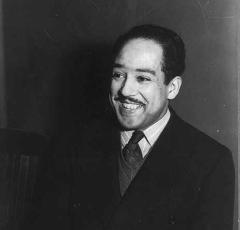
Lead Belly, National Press Club, Washington, D.C., between 1938 and 1948Huddie William Ledbetter (January 20, 1888 – December 6, 1949), better known as Lead Belly, was a legendary folk and blues musician known for his virtuosity on the twelve-string guitar, powerful vocals and the huge catalog of folk standards he introduced. Inducted into the Rock 'n' Roll Hall of Fame in 1988, artists from Bob Dylan and Led Zeppelin to Nirvana and the White Stripes have covered his songs and recognized his musical influence.

Somewhat less remembered, even locally, is Lead Belly's "Bourgeois Blues," a song written about his first visit to Washington, D.C. in 1937 — an incisive indictment of the city’s racial segregation conveyed in 3 minutes of rippling 12-string blues.

Filed Under:DC

We Will Never Die Pageant, 1943

Harry Selden’s donation of this program to the Jewish Historical Society’s archives in 1998 prompted the Society to uncover the pageant’s local story. (Photo source: Jewish Historical Society of Greater Washington)In an age before e-news, social media, and cellphones, one pageant helped bring the truth about the tragedy unfolding in Hitler’s Europe to the nation’s attention.

Seventy years after First Lady Eleanor Roosevelt, hundreds of members of Congress, and several Supreme Court Justices convened in Constitution Hall to learn of the atrocities being committed in Europe, the Jewish Historical Society of Greater Washington will mark the anniversary of that pageant, entitled We Will Never Die – a Mass Memorial to the Two Million Dead of Europe.

Pages

Public Broadcasting for Greater Washington
Copyright © 2013 WETA. All Rights Reserved.
Terms | Privacy | Guidelines

3939 Campbell Avenue, Arlington, VA 22206 Phone: 703-998-2600 | Map & Directions