Though Rosa Parks may be the face of peaceful resistance to segregation on public transportation, she was not the first to adopt the strategy. Claudette Colvin, Ellen Harris, Maggie Lena Walker, Ida B. Wells, and Charlotte Brown are just some of the individuals who took a stand against racist policies enacted after the Civil War. In Washington, D.C., one of these civil rights activists whose name has been almost forgotten was Barbara Pope. In 1906, she claimed her right to remain in the first-class seat which she had paid for, rather than be moved to the segregated car.
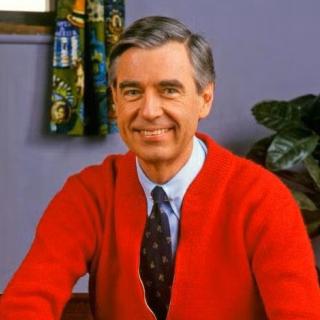
Fred Rogers, creator and host of the longtime children's television landmark Mister Rogers' Neighborhood, is most closely associated with Pittsburgh, where he produced his program at local PBS station WQED. He made two very significant visits to Washington, D.C., however, one near the beginning of his career, and the second towards the end of his life.
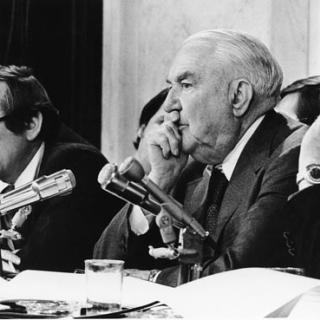
May 17, 1973 began an enthralling summer of reality television in Washington. That morning Senate Watergate Committee chairman Sam Ervin banged his gavel and launched hearings to investigate the details of the Watergate scandal, which had rocked the nation the previous June. Americans from coast to coast watched with great interest, trying to determine “what the President knew and when he knew it.” (Short answer: He knew a lot and he had known it for a long time.)


![Sketch of the mythical fuan by Pearson Scott Foresman. [Source: Wikipedia]](/sites/default/files/styles/crop_320x320/public/2023-10/Goatman_Wikipedia_Faun_2_%28PSF%29.png?h=64a074ff&itok=C9Qh-PE1)