An Experiment: D.C. History in Color

Here at Boundary Stones we love history and we’re interested in new tools and methods for engaging with the past. So, we’re doing an experiment!
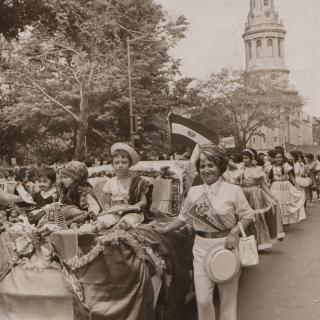
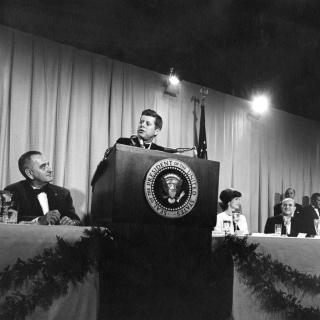
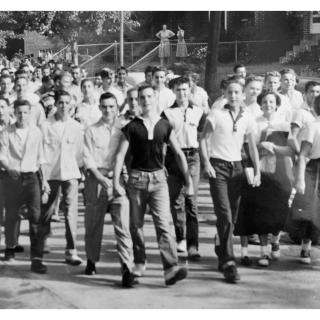
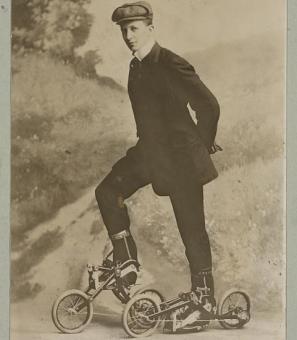
Over the next several weeks, we’ll be rolling out a video series called “D.C. History in Color,” on the WETAPBS YouTube channel. This project uses AI to restore and colorize black and white footage from the Universal Newsreels collection at the National Archives. True to the local history mission of Boundary Stones, the stories we’ve selected are focused on life in the Washington, D.C. area.
The Universal Newsreels collection is an archive of clips produced by Universal Studios, which were shown in movie theaters between 1929 and 1967. In 1974, Universal deeded its edited newsreels and outtakes to the U.S. Government without copyright restrictions and they are one of the most popular collections at the Archives today.
As described by the National Archives’ The Unwritten Record blog, the newsreels feature a variety of stories from national and international news to fads, trends and other oddities. According to Princeton University’s research guide, “Newsreels were initially seen as entertainment rather than news, and as a matter of policy, avoided controversial topics.” As mainstream media in the mid-20th century, they were made for a general, largely white audience. The tone of the stories and what was covered – along with what (and who) wasn’t – can provide insights into American culture and media. We encourage viewers to keep those realities in mind as they watch the newsreels.
Here's an example:
So, why are we colorizing the clips using AI?
In essence this project is an invitation to think more critically about the past. For many viewers, black-and-white film carries a built-in signal that says, “This is a long time ago. It’s not my world.” But, the period captured in the newsreels is relatively recent history. In fact, some of our viewers may have personal memories of the stories, which were captured by Universal’s cameras.
We hope that adding AI-generated color can help the newsreel footage seem less remote and, at the same time, encourage viewers to look at the footage with a sharper eye for detail.
AI colorization is, by nature, guesswork. It is not a historically accurate representation. A black-and-white frame contains only brightness information, not definitive clues about color. As a result, the AI models don’t *know* what color a building on 14th street was in 1953. They make a plausible guess based on thousands of vaguely similar images. Sometimes the guesses are right. Sometimes they are wrong.
With the “D.C. History in Color” series, we encourage viewers to analyze what they are seeing – both the color and the content – and ask themselves questions: What seems accurate? What seems inaccurate? What is missing? What do I want to know more about?
Please come along with us on this experiment. Take a look at the colorized newsreels and let us know what you think in the comments on our YouTube page.


![Sketch of the mythical fuan by Pearson Scott Foresman. [Source: Wikipedia]](/sites/default/files/styles/crop_320x320/public/2023-10/Goatman_Wikipedia_Faun_2_%28PSF%29.png?h=64a074ff&itok=C9Qh-PE1)