As a closeted lesbian in the 1960s, emotions of isolation, grief, and depression nearly drove Lilli Vincenz to suicide in her early twenties. But after being outed by a roommate and joining a gay rights organization, Vincenz worked tirelessly to prevent other gay, bisexual, and questioning women from feeling the same shame and loneliness. Key to her efforts (and beloved by its attendees) was the Gay Women's Open House, which operated out of her home for nearly a decade. This safe, nonjudgemental space to gather, converse, and laugh could be life-changing for its attendees.
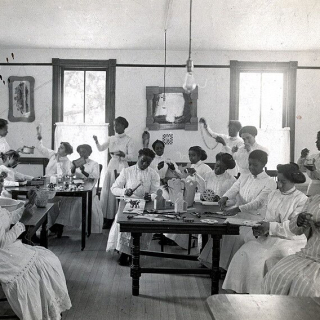
Despite the intense application process and the curriculum’s rigorous Baptist philosophy which left little room for error, a diploma from the National Training School for Women and Girls opened doors once unimaginable to its students. Its principal and founder, Nannie Helen Burroughs, was no less intense, trailblazing, and ingenious herself.
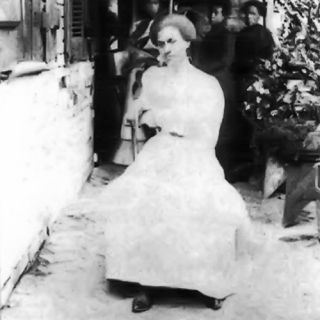
Though Rosa Parks may be the face of peaceful resistance to segregation on public transportation, she was not the first to adopt the strategy. Claudette Colvin, Ellen Harris, Maggie Lena Walker, Ida B. Wells, and Charlotte Brown are just some of the individuals who took a stand against racist policies enacted after the Civil War. In Washington, D.C., one of these civil rights activists whose name has been almost forgotten was Barbara Pope. In 1906, she claimed her right to remain in the first-class seat which she had paid for, rather than be moved to the segregated car.
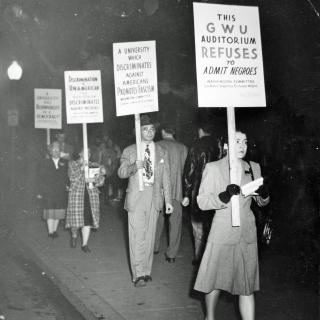
In 1946, Washington, DC was on the precipice of a Civil Rights movement. One of the first tests of the city’s shifting beliefs came with the opening of the George Washington University’s Lisner Auditorium and its use for commercial theater performances. The first play put on at the theater, Joan of Lorraine, turned out to be a experiment in the continuance of race-based discrimination policies. Was the swift public backlash to the segregation enforced by GW enough to tear down the artificial barriers between black and white Washingtonians at Lisner?


![Sketch of the mythical fuan by Pearson Scott Foresman. [Source: Wikipedia]](/sites/default/files/styles/crop_320x320/public/2023-10/Goatman_Wikipedia_Faun_2_%28PSF%29.png?h=64a074ff&itok=C9Qh-PE1)