“Washington’s Other Monument”: The Remarkable Life of Alice Roosevelt Longworth
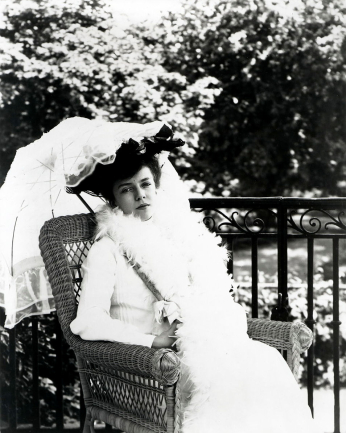
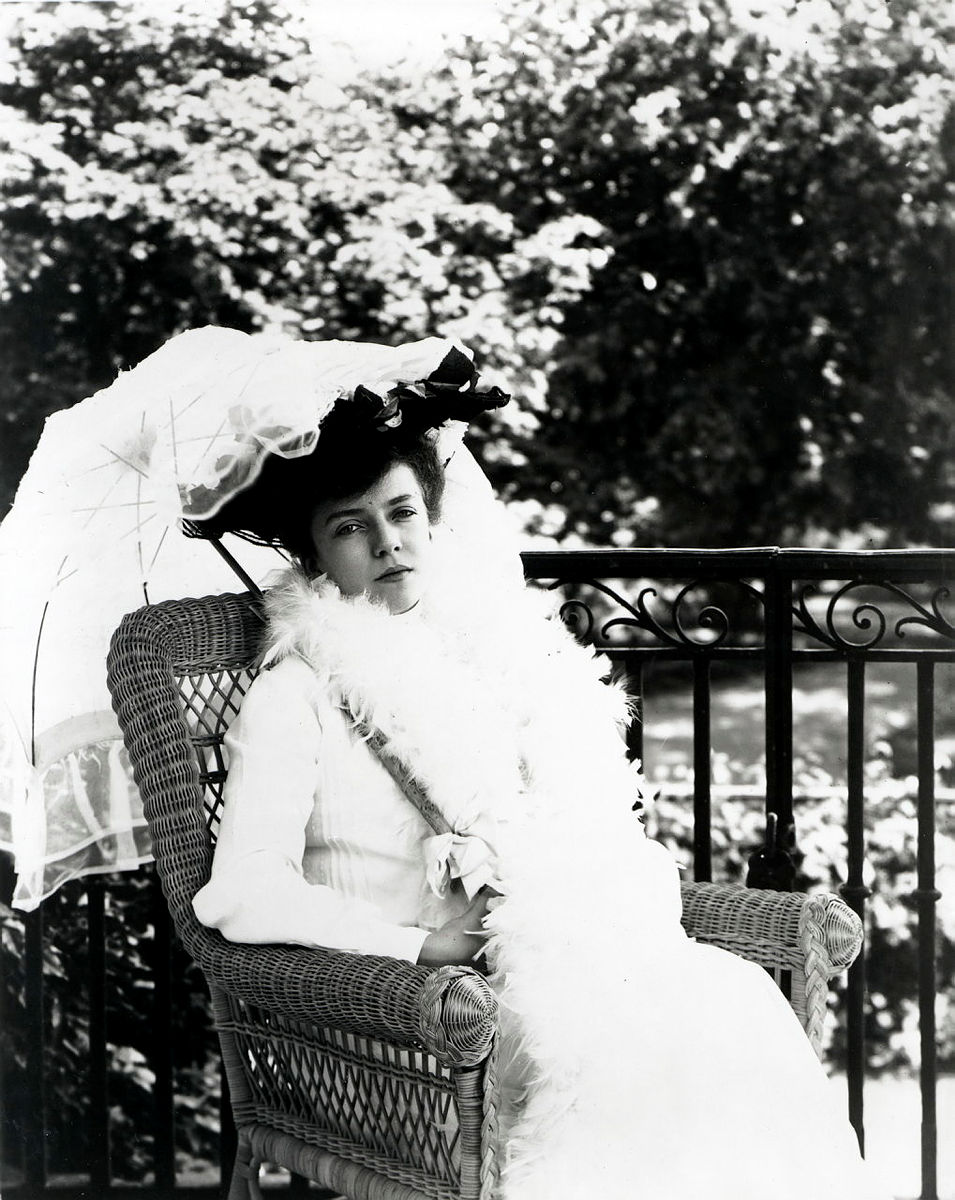
Washington, DC, has been home to countless larger-than-life political figures. But perhaps no other Washingtonian has had such a long-lasting—and underappreciated—impact on American popular culture and politics as Alice Roosevelt Longworth, the eldest child of President Theodore Roosevelt.
During her father’s administration, “Princess Alice” captured the public’s imagination with her rebelliousness and defiance of the era’s rigid social norms for women. She smoked cigarettes in public (and occasionally on the roof of the White House), stayed out late partying, placed bets on horse races, scandalously rode in cars alone with men, and even kept a pet snake she dubbed “Emily Spinach.” 1
Though she never ran for public office, throughout her adult life Alice wielded significant influence on Washington’s social and political scene from her Dupont Circle home, where she resided for over five decades. 2 Renowned for her intellect and searing wit, Alice—or “Mrs. L,” as she preferred to be known—hosted famous tea and dinner parties that could make or ruin an aspiring politician’s career.
“If you can't say something good about someone, sit right here by me,” a favorite quote of hers, was fittingly stitched on a pillow in her parlor. 3
“She commands our attention not only because of her many achievements, her position and use of power at the epicenter of the nation’s capital, her inherently interesting and often sorrow-filled life, but because she was an early-model bad girl who snarled instead of smiling, who spoke up rather than shut up, and who surrounded herself with men and women of ideas rather than a house full of children,” historian Stacy A. Cordery writes in her 2007 biography of Alice. 4
Alice’s remarkable life began with tragedy. Her mother and namesake, Alice Hathaway Lee Roosevelt, died two days after her birth in 1884, leaving father Teddy despondent. 5 Alice was raised by her aunt Anna “Bye” Roosevelt before Teddy’s marriage to Edith Kermit Carow, which produced five half-siblings. 6
Upon her father’s ascension to the presidency in 1901, the teenaged and independent-minded Alice thrived in the national spotlight. Her antics inside and outside of the White House drew widespread press coverage, with newspapers recounting how she “joyously sang ragtime along with the Marine Band,” hurdled over furniture “after the dinner coffee cups were carried away,” and “bet on [horse] races at Bennings track” in Northeast DC. 7
One journalist went so far as to say Alice “probably shocked more sensibilities in her time than any other young woman who ever crossed the screen of public life.” 8 Confronted about his daughter’s headline-making behavior, an exasperated President Roosevelt is said to have remarked, “I can either run the country or I can attend to Alice, but I cannot possibly do both.” 9
Despite—or because of—her misadventures, the public adored Alice, who became a cultural icon, one of the nation’s earliest versions of a social media influencer. She inspired popular songs like “The Alice Roosevelt March” and “The American Girl,” and became the namesake of the widely popular “Alice blue,” the shade of the dress she wore to her 1902 social debut that matched her blue-gray eyes. 10
In 1905, Teddy dispatched Alice to East Asia as part of an American diplomatic mission alongside dozens of US senators, congressmen, and diplomats. The politicians played second fiddle to the “First Daughter” on the trip, as “newspapers and magazines from all parts of the world vied with one another in relating just what Miss Alice did at every hour of the day.” 11
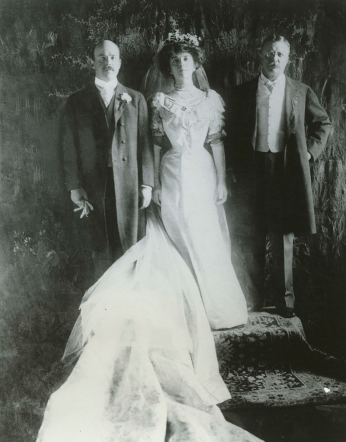
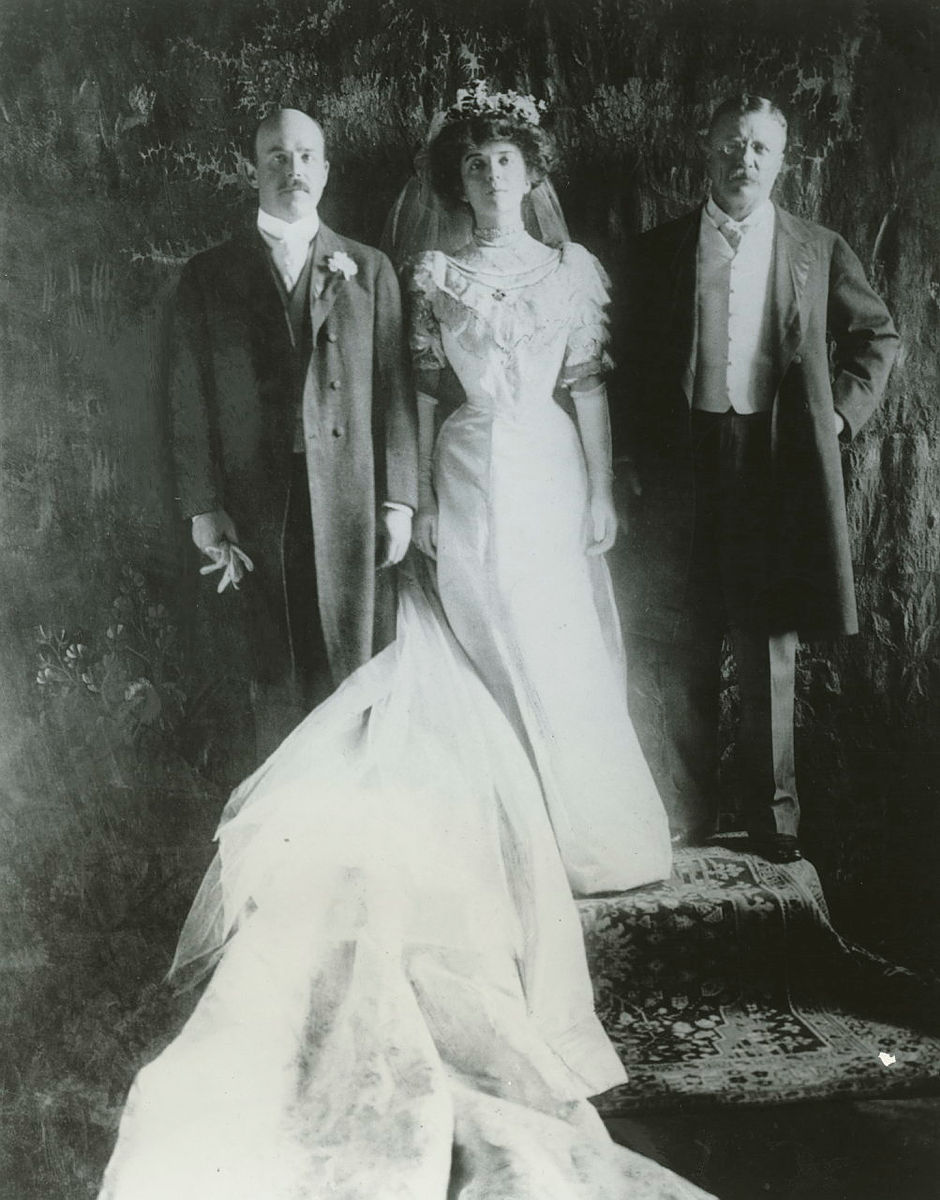
During the tour, which made stops in Japan, Hawaii, China, the Philippines, and Korea, the 21-year-old Alice was romanced by Representative Nicholas Longworth III, an Ohio Republican. To the press’s delight, the two were engaged soon after their return. Their wedding ceremony, held in the East Room of the White House, drew over a thousand guests, who got to witness the bride slice into the cake with a sword borrowed from a nearby military aide. 12
The marriage was a rocky one. Both sides committed infidelities, with Alice developing a not-so-secret relationship with Senator William Borah of Idaho. 13 The union was further strained in 1912 as Alice supported her father’s bid as a third-party presidential candidate while Longworth remained loyal to President William Howard Taft (Alice would even campaign against Taft in Longworth’s own district). 14
It wasn’t until 1925 that Alice gave birth to her first and only child, Paulina, who would later be revealed via Alice’s diaries to be Borah’s daughter. At the time, Washingtonians whispered that Alice had wanted to name the baby Deborah, as in “de Borah.” 15
Shortly after Paulina’s arrival, Alice and Nick moved into a four-story, limestone-fronted house at 2009 Massachusetts Avenue NW, just off of Dupont Circle, that would be Alice’s home for the next 55 years. 16 The house stood at the center of Embassy Row, where Washington’s social and political elites resided in a long stretch of Gilded Age mansions and townhouses.
Marriage and motherhood did little to slow down Alice’s lifestyle. The Longworths played “serious poker” at their new home, with Alice claiming $10,000 in winnings one winter (after she had also repaid all of Nick’s debts). 17 Alice ensured she stayed politically engaged as well, hosting lunches and dinners attended by such prominent guests as Secretary of the Treasury Andrew Mellon and Senate Majority Leader Charles Curtis. 18
While not holding any official office herself, by the 1920s Alice had become “one of the powerful influences affecting national affairs today,” according to one contemporary newspaper profile. 19
“She knows politics and statecraft inside and out,” writer Margaret M. Lukes opined in 1925. 20 “Daily while Congress is in session she may be seen in the gallery watching proceedings on the floor of either house, her head held high, her hat off, displaying fluffy, mouse-colored hair.”
Despite her professed shyness, Alice exhibited a personal magnetism which made her “more like him [Theodore Roosevelt] than any of his other children.” 21 A staunch Republican and isolationist, Alice successfully lobbied to keep the US out of the League of Nations after World War I and criticized her distant cousin Franklin Delano Roosevelt’s New Deal in syndicated newspaper columns. 22
“Politically, his branch of the family and ours have always been in different camps, and the same surname is about all we have in common,” Alice remarked in a 1932 speech regarding FDR’s candidacy. 23 “I am a Republican. . . . I am going to vote for Hoover. . . . If I were not a Republican, I would still vote for Mr. Hoover this time.”
After the death of her husband in 1931, Alice continued to host “hundreds of gatherings” that “played their part in the smooth workings of the American government,” connecting with “Republicans and Democrats, hawks and doves, people with and people lacking society’s approbation,” according to Cordery. 24 To make ends meet during the Great Depression, she modeled for tobacco advertisements and released a well-received memoir, Crowded Hours.
After her guests had departed, Alice would often retreat to her third floor bedroom and spend hours reading from one of the books “spilling out of the revolving bookcase she kept by her bedside.” 25 Friends knew not to try calling her until after 1:00pm, after which she would “bark her fierce hello” over the phone. 26
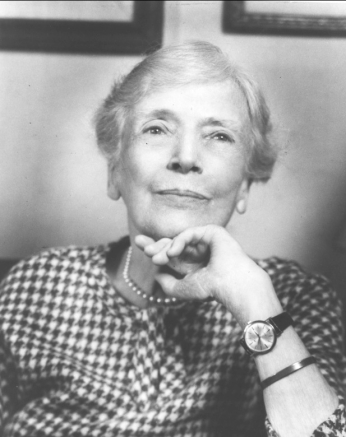
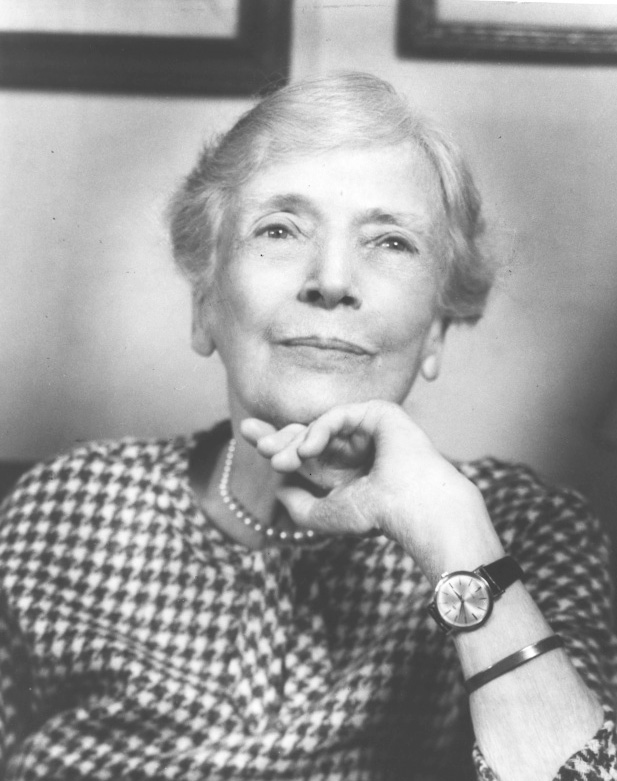
In 1957, Alice’s life took another tragic turn when Paulina overdosed on a combination of sleeping pills and alcohol. 27 Then Vice President Richard Nixon, an attendee of Alice’s dinners, served as a pallbearer at the funeral. 28 Alice subsequently won custody of her granddaughter Joanna, who moved into “an aerie on the fourth floor” of the Massachusetts Avenue house, and said the two lived as “‘free spirits’ together.” 29
In spite of her Republican past, Alice befriended the Kennedy family in the 1960s and even voted for Lyndon Johnson in 1964. 30 LBJ complained he couldn’t kiss her because of her famously wide-brimmed hats, which she had popularized in the early 1900s and continued to wear throughout her life. 31 “That, Mr. President, is why I wear them,” she replied. 32
Amid the societal upheaval of the late 1960s, Alice remained as opinionated and involved in politics ever. After Robert F. Kennedy’s 1968 assassination she again supported her close friend Nixon, who would throw an 87th birthday party for Alice at the White House. 33 When tear gas fired at nearby Vietnam War protestors entered her home, Alice joked the chemicals “cleared my sinuses.” 34
In her later years, Alice was often interviewed by historians about DC and US history. She had, after all, seen Dupont Circle’s residents shift from top hat-wearing dignitaries to tie-dye-clad hippies. But Alice was still Alice—a fixture in DC’s political scene and “the most fascinating conversationalist of our time,” as Nixon put it. 35
As the country changed, so did her house, which today serves as the headquarters of the Washington Legal Foundation. She allowed poison ivy to invade her front yard “because she found it rather funny.” 36 Alice also let DC’s School Without Walls hold writing and literature classes inside the home, which was adorned with animal skins from her father’s hunting trips, among other momentos. 37
Alice died on February 20, 1980, shortly after her 96th birthday, and was buried in Rock Creek Cemetery. 38 The last surviving child of Teddy Roosevelt, Alice’s life spanned 18 different presidents, most of whom she knew personally. She not only witnessed but shaped the course of American history—earning her the rightful nickname of “Washington’s other monument.” 39
“What she wants to do she does,” Lukes put it simply in her 1925 article recapping Alice’s life thus far. 40 “What she doesn’t want to do she flicks away as easily as she did the ashes of her first cigarette.”
Footnotes
- 1
Katie Costanzo, “‘White House Kids’ Series – Alice Roosevelt Longworth,” Ronald Reagan Presidential Library & Museum, April 17, 2023.
- 2
Stacy A. Cordery, Alice: Alice Roosevelt Longworth, from White House Princess to Washington Power Broker (London: Penguin Books, 2007), 13.
- 3
Cordery, 17.
- 4
Cordery, 18.
- 5
Britannica Editors, “Alice Roosevelt Longworth,”Encyclopædia Britannica.
- 6
John Milton Cooper, “Theodore Roosevelt,”Encyclopædia Britannica.
- 7
Margaret M. Lukes, “Princess Alice Bows at Last to Her First Boss,”The Birmingham Age-Herald (Birmingham, Alabama), March 22, 1925.
- 8
Margaret M. Lukes, “Princess Alice Bows at Last to Her First Boss,”The Birmingham Age-Herald (Birmingham, Alabama), March 22, 1925.
- 9
Katie Costanzo, “‘White House Kids’ Series – Alice Roosevelt Longworth,” Ronald Reagan Presidential Library & Museum, April 17, 2023.
- 10
Cordery, 82.
- 11
“The Romance of Alice Roosevelt,”River Falls Journal (River Falls, Wisconsin), January 25, 1906.
- 12
Katie Costanzo, “‘White House Kids’ Series – Alice Roosevelt Longworth,” Ronald Reagan Presidential Library & Museum, April 17, 2023.
- 13
Katie Costanzo, “‘White House Kids’ Series – Alice Roosevelt Longworth,” Ronald Reagan Presidential Library & Museum, April 17, 2023.
- 14
Andrew Glass, “Alice Roosevelt marries in the White House, Feb. 17, 1906,”Politico, February 17, 2009.
- 15
Cordery, 419.
- 16
Cordery, 420.
- 17
Cordery, 420.
- 18
Cordery, 420.
- 19
Margaret M. Lukes, “Princess Alice Bows at Last to Her First Boss,”The Birmingham Age-Herald (Birmingham, Alabama), March 22, 1925.
- 20
Margaret M. Lukes, “Princess Alice Bows at Last to Her First Boss,”The Birmingham Age-Herald (Birmingham, Alabama), March 22, 1925.
- 21
Margaret M. Lukes, “Princess Alice Bows at Last to Her First Boss,”The Birmingham Age-Herald (Birmingham, Alabama), March 22, 1925.
- 22
Cordery, 4.
- 23
“Disclaimer,”Time, October 24, 1932.
- 24
Cordery, 13.
- 25
Cordery, 535.
- 26
Cordery, 535.
- 27
Cordery, 566.
- 28
Stephen Hansen, “‘Princess’ Alice Roosevelt Longworth,” Washington Chronicles, January 13, 2021.
- 29
Cordery, 567.
- 30
Stephen Hansen, “‘Princess’ Alice Roosevelt Longworth,” Washington Chronicles, January 13, 2021.
- 31
Cordery, 607.
- 32
Cordery, 607.
- 33
Stephen Hansen, “‘Princess’ Alice Roosevelt Longworth,” Washington Chronicles, January 13, 2021.
- 34
Cordery, 587.
- 35
Cordery, 570.
- 36
Cordery, 606.
- 37
Corder, 605.
- 38
Stephen Hansen, “‘Princess’ Alice Roosevelt Longworth,” Washington Chronicles, January 13, 2021.
- 39
Britannica Editors, “Alice Roosevelt Longworth,”Encyclopædia Britannica.
- 40
Margaret M. Lukes, “Princess Alice Bows at Last to Her First Boss,”The Birmingham Age-Herald (Birmingham, Alabama), March 22, 1925.
![Sketch of the mythical fuan by Pearson Scott Foresman. [Source: Wikipedia]](/sites/default/files/styles/crop_320x320/public/2023-10/Goatman_Wikipedia_Faun_2_%28PSF%29.png?h=64a074ff&itok=C9Qh-PE1)