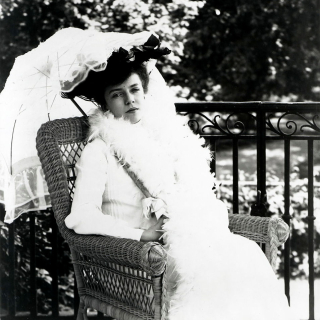
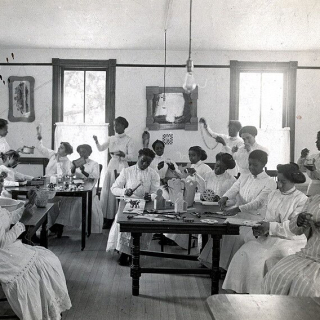
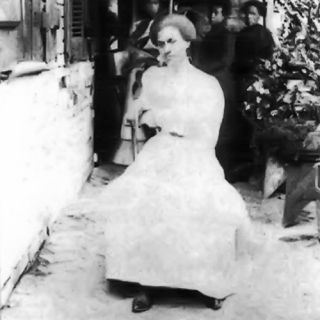
Though Rosa Parks may be the face of peaceful resistance to segregation on public transportation, she was not the first to adopt the strategy. Claudette Colvin, Ellen Harris, Maggie Lena Walker, Ida B. Wells, and Charlotte Brown are just some of the individuals who took a stand against racist policies enacted after the Civil War. In Washington, D.C., one of these civil rights activists whose name has been almost forgotten was Barbara Pope. In 1906, she claimed her right to remain in the first-class seat which she had paid for, rather than be moved to the segregated car.
Washington, DC, has a rich baseball history stretching back over 160 years. But long before the Nationals and Senators of Major League Baseball and the Negro leagues’ Homestead Grays won over legions of fans, famed abolitionist Frederick Douglass’s son Charles paved the way for black ballplayers in the District.
While it’s known today for its forested hiking trails and outdoor memorial to America’s 26th president, Theodore Roosevelt Island played a prominent role in Washington, DC’s Civil War history. In 1863, the island became home to Camp Greene, training grounds of the 1st United States Colored Troops (USCT), a Black infantry regiment recruited in the District.
In the 1920s, entrepreneur Hattie Sewell looked to put her extensive experience in the hospitality industry to work turning around the Peirce Mill Teahouse in Rock Creek Park. But as a Black businesswoman in the 1920s, Sewell faced harsh blow back, even as her business thrived.
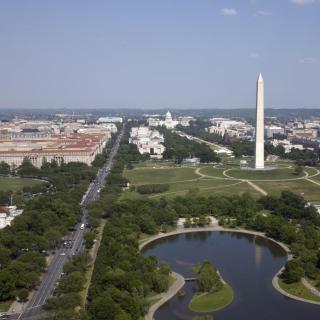
Should the National Mall really be a National Lake? Leon Krier thought so! The Luxembourgish architect came to D.C. in the 1970s and saw Washington as an unfinished sketch waiting to be painted in full. Read about his fantastical plans to "finish" our capital city.
During the Revolutionary War, many communities adopted Liberty Trees -- living symbols of opposition to British rule. The trees became a target for destruction by British soldiers, but unlike many other cities, Annapolis never fell under British control during the war—meaning the Liberty Tree survived the war unharmed. It was a silent witness to the birth of a new nation and survived until 1999, the last surviving colonial Liberty Tree.
Though they may fall by the wayside of textbooks, without the efforts American women made toward the Revolution, the Continental Army would have been in dire straits indeed. Luckily, the women of Maryland and Virginia met the challenges of supply shortages, low morale, and lack of funds with determination and patriotism.
George Washington's enslaved valet William Lee accompanied the General to every encampment and battle during the American Revolution. But, until recently, history has largely forgotten him.
Charles Carroll of Carrollton, a wealthy Maryland statesman was the last surviving signer – and only Catholic signer – of the Declaration of Independence. He lived to age 95, passing away on November 14, 1832. After the deaths of John Adams and Thomas Jefferson in 1826, Carroll became the final living link to the founding generation. His death marked the end of an era when the nation's birth could still be recalled by one of its original framers.
America might not have existed long without the heroic sacrifice of a small group of Marylanders on August 27, 1776. That late summer day men of the First Maryland Regiment found themselves surrounded and hopelessly outnumbered by British forces during the Battle of Brooklyn (also called the Battle of Long Island), the largest battle of the Revolutionary War, fought just weeks after the signing of the Declaration of Independence.
Through the first five years of the Revolutionary War, the beloved home of George Washington has managed to remain out of harm's way. But as winds sweep inland along the Potomac, British ships start to stalk upriver. From the windows of Mount Vernon, the household can see homes and plantations burn on the Maryland shore. Then, the warships turn their guns toward General Washington's home.
On a chilly Saturday in October of 1967, more than 100,000 people gathered in Washington to protest America's involvement in the Vietnam War. More than half of them would then march to the Pentagon, where photojournalist Bernie Boston snapped one of the Antiwar Movement's most iconic photographs. Later in the evening, though, as demonstrators faced off with soldiers and US Marshals, the protest turned more dangerous.