

“The people of Washington lay claim to you”: Almost 50 Years After the American Revolution, Lafayette Returned to the U.S.
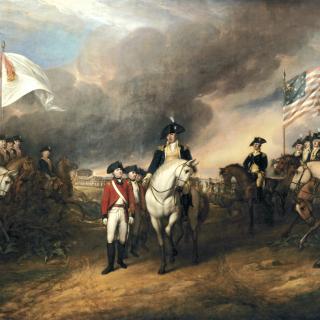
Most of America (and the rest of the world too) knows Lafayette as the 19-year-old “Lancelot of the revolutionary set” who “came from afar just to say ‘Bonsoir!’” to King George III of England and help the patriots win their independence. 1 America’s ultimate Founding Father, George Washington, took him under his wing; he was injured in the Battle of Brandywine; he returned from France with Rochambeau and the men needed to seal victory in the war at Yorktown. All of this before returning to France in 1784 after the Treaty of Paris sealed the future of the United States as its own country.
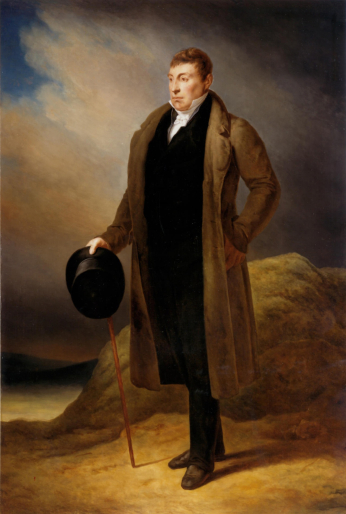
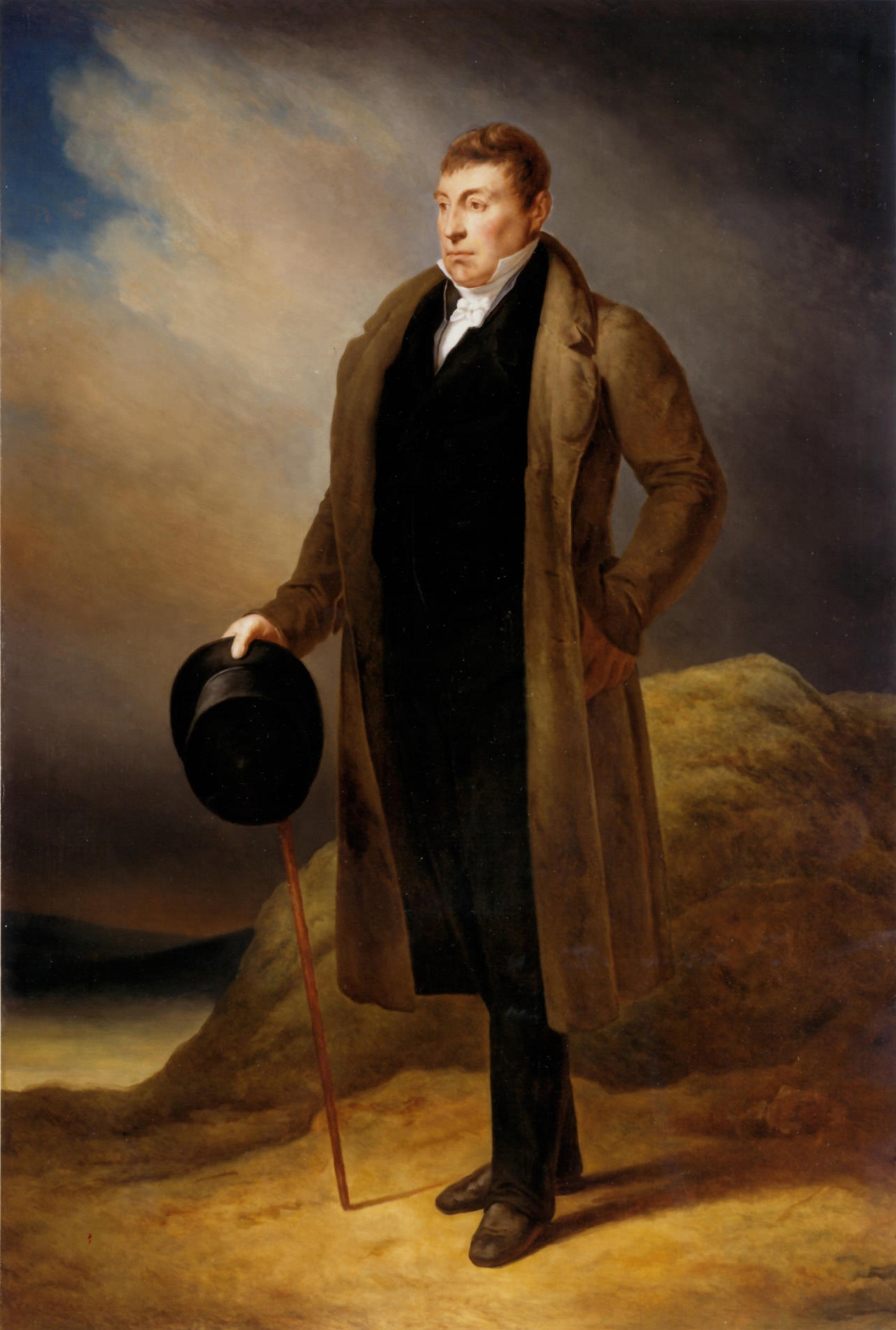
Fast forward forty years after the Treaty of Paris, and Gilbert du Motier de Lafayette was a 66-year-old man. His life had been long and tumultuous. After years of action in the American Revolution, he picked up his sword again in France during their Revolution as commander-in-chief of the National Guard. By 1792, factions in his home country had ordered his arrest, forcing him to flee to the Austrian Netherlands, where he was captured and spent over five years in prison. Napoleon himself managed to get Lafayette released and he returned to France where he refused to participate in government until a new administration took over in 1814.
By 1824, Lafayette might have been ready to retire, but there was more for him to do. The United State was preparing to celebrate fifty years of independence and they wanted him to join in as a guest of honor and to receive their thanks for his part in their pursuit of liberty. Sometime in the spring of that year, Lafayette received a letter from President James Monroe, sent on behalf of Congress and the American people:
“My dear General…the Congress has passed a resolution on this subject in which it expresses to you the sincere attachment of the entire Nation, which ardently desires to see you again in its midst; the time in which you believe that you can respond to this invitation is left totally to your choice; but know that, whatever your decision may be, it will suffice to have the kindness to inform me so that, as soon as possible, I may give the orders for a vessel of the State to pick you up at the port which you indicate and bring you to this adopted country of your youth which has always retained the memory of your important services.” 2
By July, the General was on a ship to America, ready to see his second home again.
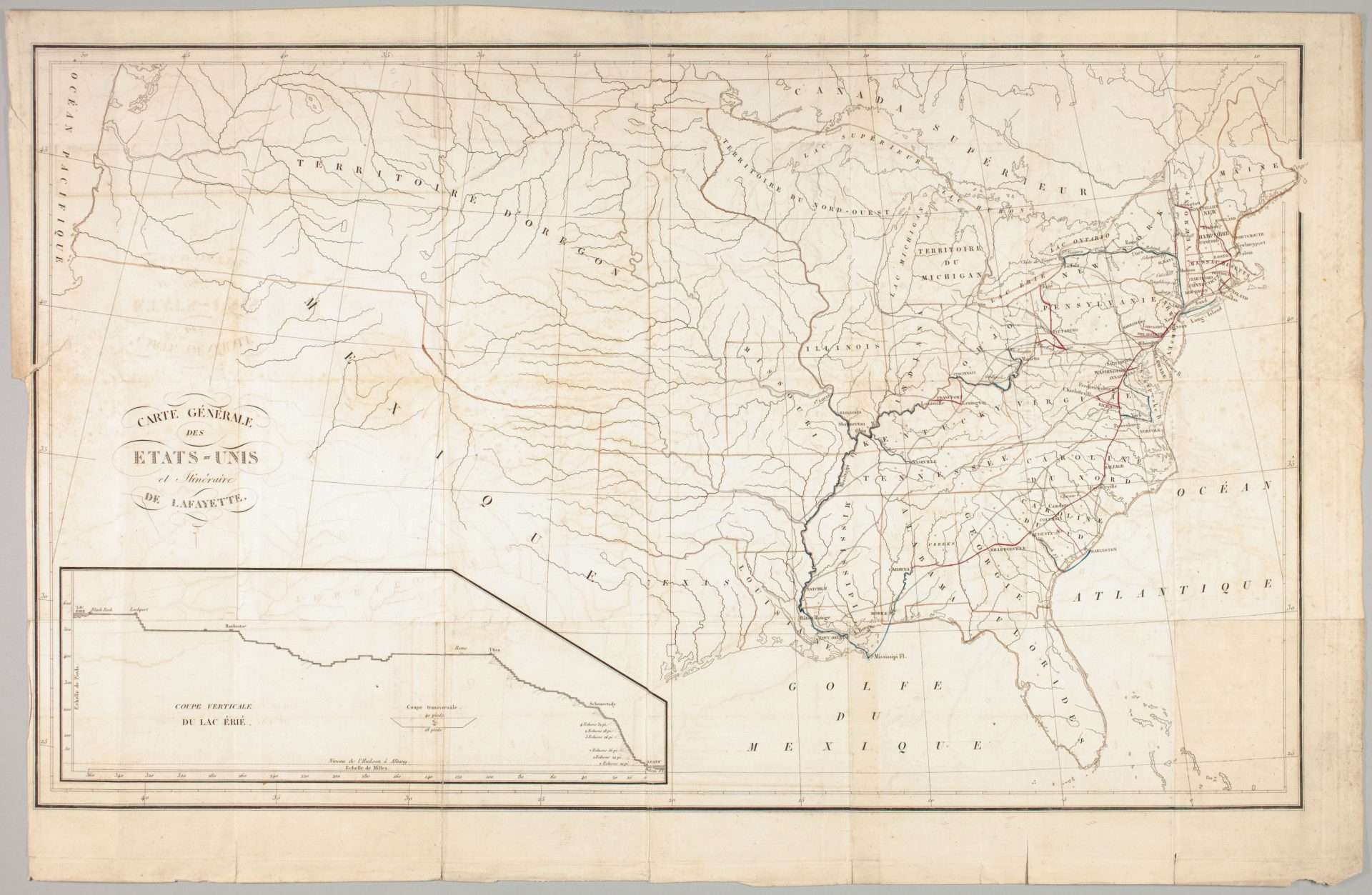
Lafayette arrived on Staten Island on August 15, 1824 and he spent a couple of months touring the northeast of the young country. In fact, he would spend about 14 months making his way through all 24 states which now formed the United States of America, but of all of these, he spent the most – and the most significant – time in Washington, D.C.
For this victory tour, Lafayette had chosen as companions his son, George Washington Motier de Lafayette, and a secretary hired for the purpose of sending updates to liberals in France in hopes of “showing the success of the American experiment” and encouraging the French to pursue a similar course. 3 His name was Auguste Levasseur. Levasseur recorded about 600 pages of observations on the American political system, landscape, and reception of the Nation’s Guest, painting a picture of a people and a country deeply grateful for Lafayette’s sacrifice.
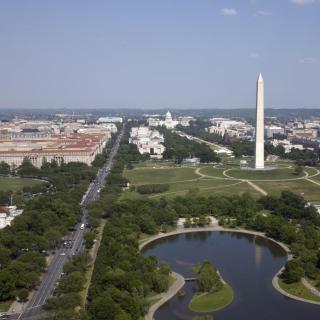
Though the General’s party was to travel through all of the states, the locals of Washington, D.C. were determined that his stop in their city be extra special. They were, after all the capital, and not only that, their home was named for the man to whom Lafayette owed much of his education on liberty. For weeks, the Daily National Intelligencer tracked the group’s progress, keeping citizens and the Committee of Arrangements charged with preparing for his arrival informed as he closed in. The people of Washington began to get ready. Taverns were renamed to “Lafayette House,” “Lafayette Cordial” could be had either retail or wholesale for those who wished to imbibe, and “Superior silk Umbrellas, with a likeness of General Lafayette” were advertised in the days leading up to the event. 4
No one would work or attend school the day the General arrived in the Federal City, not even those tasked with keeping the citizenry informed. The National Intelligencer told readers that “As it would be unreasonable to deprive the persons attached to our Office of an opportunity of joining in the military duties and civic enjoyments which to-morrow is expected to bring with it, it will not be expected of us to issue a paper from this office on Wednesday.” 5
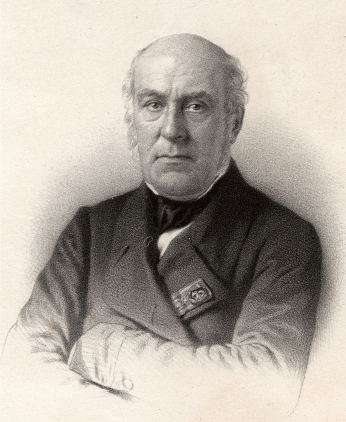
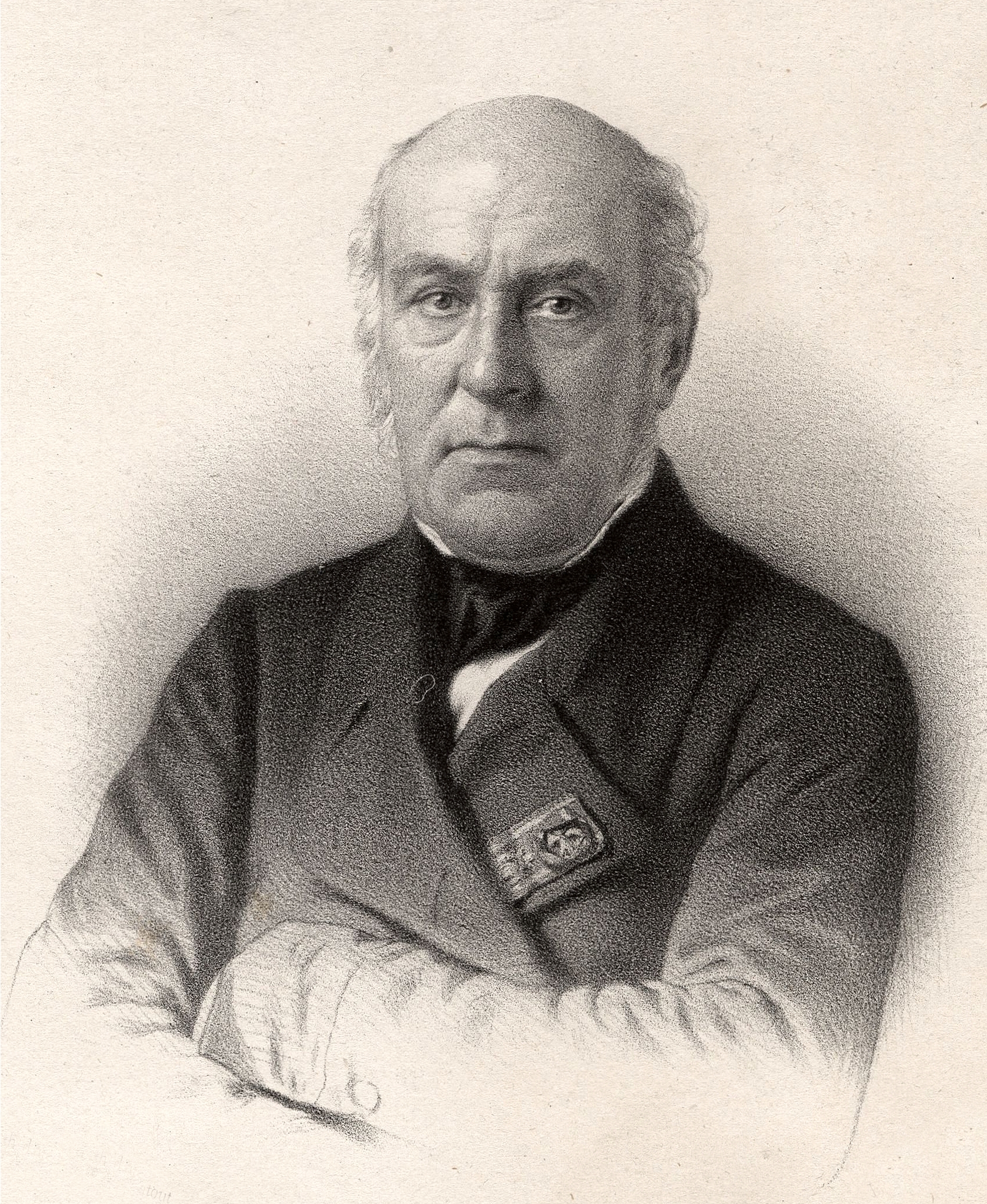
All was ready as General Lafayette approached in the early afternoon of October 12, 1824. He was met outside the boundaries by surviving officers of the Revolutionary War and by the Committee of Arrangements, who presented a landau “drawn by four fine greys” provided by the city for his use during his visit. Lafayette switched from the carriage provided by the city of Baltimore, his previous stop, to this new gift, and proceeded into Washington.
The welcome was uproarious.
“The shouts of thousands of spectators mingled with the roar of the artillery, and rent the air with acclamations of joy and welcome.”
“The General found himself in front of the most brilliant military spectacle which our city ever witnessed.”
“[T]he animation of the whole, associated with the presence of the venerated object of so much curiosity and affection, gave a grandeur and interest to the scene which has never been equalled here on any former occasion.” 6
The procession moved slowly through the town, its pace dictated by the swelling crowds and public decorations. The market house on East Capitol Street “was handsomely adorned with proper emblems, and the Declaration of Independence, above which perched a living eagle of the largest size.” At the entrance to Capitol Square, “about half a dozen young Ladies” had decorated a victory arch overnight “so as to strike the citizens with astonishment on the morning of the 12th.” Astonishing it was. The arch was “decorated with evergreens and other ornaments, with appropriate labels, expressive of the esteem and gratitude of the citizens to the National Guest; on the pinnacle stood another eagle.” This second bird, “which was obligingly lent for the occasion by Mr. Griffith, of the Washington Museum, was perched, bearing in his beak an elegant gilt scroll, with the words, ‘Lafayette, the associate of Washington, and Liberty’s friend,’ inscribed on it.” 7
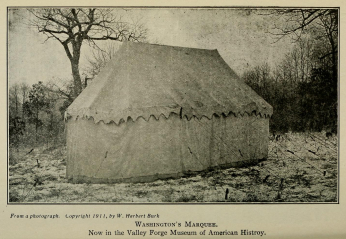
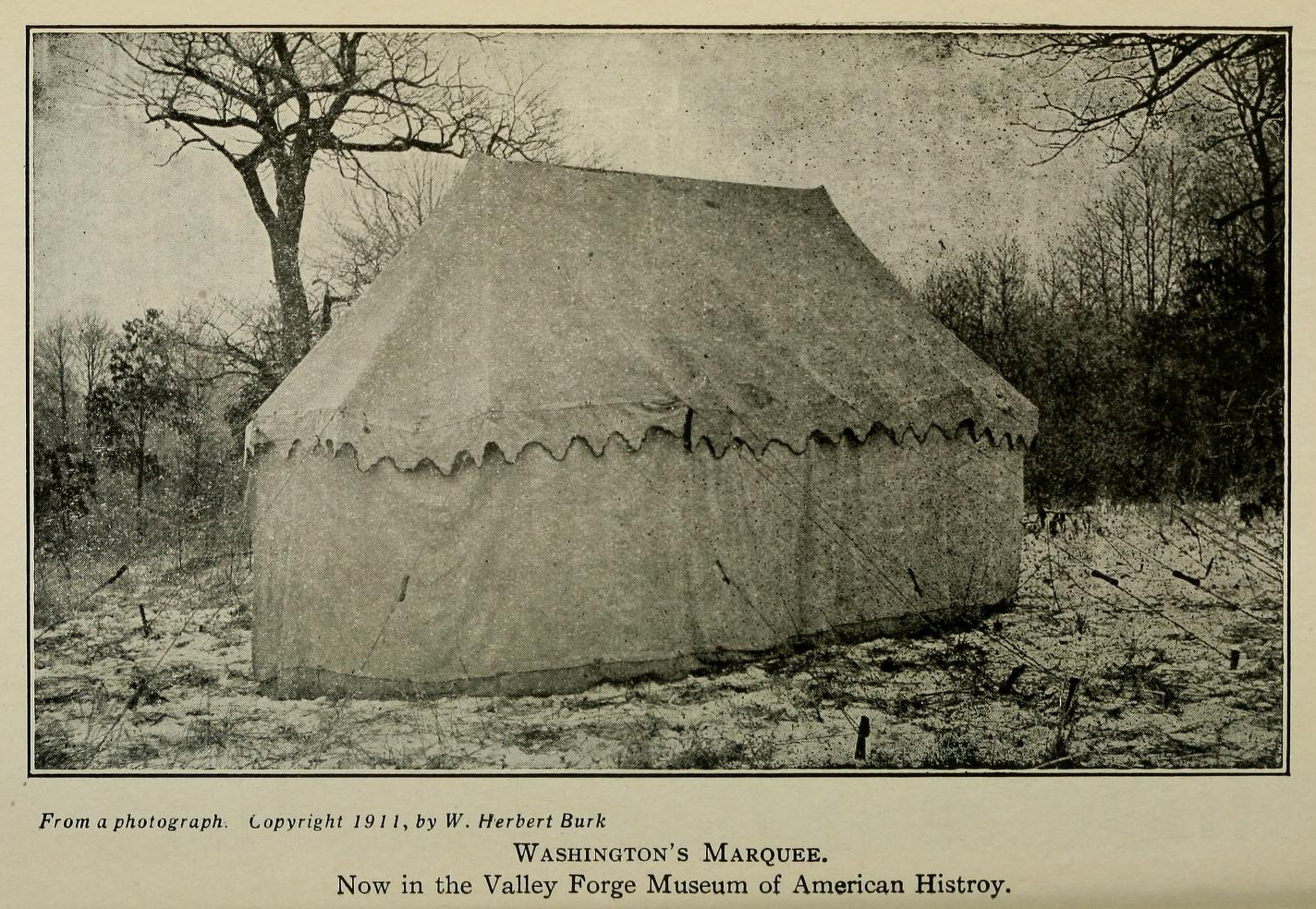
After the avian portion of the ceremonies, Lafayette was greeted by 25 young girls dressed in white, representing the 24 states and one capital. They wore wreaths of flowers and held national flags. The welcome seemed to go on and on as students from the colleges and seminaries, boys from the Juvenile Infantry, and school boys and girls each got their chance to represent the city. Finally, the party arrived at the “venerable tent of Washington” – the very tent used during the Revolutionary War and in which Lafayette had spent significant time – set up outside of the Capitol. 8
The Mayor of the city was given the honor of making a speech on the vestibule of the Capitol before any federal officials were allowed to greet the General. Lafayette was, after all, the city’s guest just as much as the nation’s. He recalled Laffayette’s role as hero of both America and France and told him, “we welcome you, with our whole hearts, to the Metropolis of our Nation, created, since you left us, out of a wilderness - a city especially founded by our people as the permanent memorial of their liberty.” 9
Lafayette thanked him for “The kind and flattering reception with which I am honored by the citizens of Washington.” 10 He then proceeded to the President’s House and the original oval office to meet the representatives of the nation.
Much of General Lafayette’s time in Washington would, naturally, be filled with official events and with meeting politicians from around the country, but the citizens of the Federal City would not allow his stay to be solely devoted to the government. On his first night in town, President James Monroe expressed that he dearly wished to host the General and his party during his time in Washington, “but I am obliged to give up this pleasure. The people of Washington lay claim to you; they say that you are the Nation’s Guest and that nobody other than themselves has the right to house you…the municipality has prepared a townhouse for you and has put a carriage at your disposal…You must accept…As for this evening, I know that the municipality expects you at a public banquet.” 11
Lafayette graciously and gratefully accepted the people’s hospitality over the next several days and throughout the winter. As his visit to Washington was so late in the year, after a quick foray into Virginia, he returned to the city to make it his home base for the cold months before continuing south. He filled his days with receiving “a large number of citizens,” visiting old friends (including several Custises, George Washington’s adopted family through his wife, Martha), and receiving honors from Congress in appreciation of his service. 12
Once the winter began to thaw, Lafayette did set forth from Washington to complete his journey, but he would not be long in returning. Just under a year after his first arrival in the Federal City, he entered the city once again, this time to be hosted by the newly-elected President John Quincy Adams. His focus on this final visit to Washington was to take his leave of America and prepare for the long journey back to France. There were still a few adventures ahead of him though.
After a visit to the former President Monroe at his home at Oak Hill, one of the horses pulling the carriage in which President Adams and General Lafayette rode died of the heat. “As soon as the accident had happened, all of us had alighted to help the horse get up, but seeing him dead, we sat down on the grass near his body while a manservant went to look for another horse in the most nearby village. Travelers passed at every moment alongside us and glanced with curiosity at this group in which not a single one suspected the presence of the First Magistrate of the Republic and of the adopted son of a great nation.” 13
There was also one last celebration to be enjoyed, as Washington hosted Lafayette for his birthday on September 6, 1825. Toasts were given at the dinner, as they had been throughout his tour, but these rang with a note of sadness which the others had not held as guests “already felt, by anticipation, the regret of separation” which would take place the next day. 14
President Adams kept it short: “To February 22 and to September 6, birthdays of Washington and Lafayette.” The General responded in kind:
“To July 4, birthday of liberty in the two hemispheres.” 15
The next day, schools and businesses closed once again as all of Washington came to see Lafayette off. The Frenchman was emotional, having to gather himself before delivering one last speech of gratitude to the Nation and his hosts. He spoke to the President and the people of the Federal City with tears in his eyes. “God bless you, Sir, and all who surround us. God bless the American people, each of their States, and the federal government. Accept this patriotic farewell of an overflowing heart; such will be its last throb when it ceases to beat.” 16
“Restrained as if by a magic spell,” Lafayette found “a thousand pretexts” to remain with his friends a few moments longer. 17 But finally, the time came for him to bid farewell to his adopted fathers, brothers, sisters, and children. He boarded the steamship The Mount Vernon and waved to the people as it carried him down the Potomac to The Brandywine which would convey him home.
As The Brandywine glided through the water, Lafayette had one last chance to look back on America. “We entered the Chesapeake Bay under full sail, sailing at the center of a brilliant rainbow, one of whose feet pressed against the Maryland shore, and the other against that of Virginia.” 18 His last view of Washington was beautifully framed.
Footnotes
- 1
Lin-Manuel Miranda, “Aaron Burr, Sir,” by Lin-Manuel Miranda, Atlantic Records, track 2 on Hamilton (Original Broadway Cast Recording), 2015, Spotify.
- 2
Auguste Levasseur, Lafayette in America in 1824 and 1825: Journal of a Voyage to the United States, trans. Alan R. Hoffman (1829; Lafayette Press, 2006), 1–2.
- 3
Levasseur, Lafayette in America, in 1824 and 1825, xix.
- 4
Nathan Eaton, “Lafayette House,” Daily National Intelligencer (Washington, D.C.), October 4, 1824; “Lafayette Cordial,” Daily National Intelligencer (Washington, D.C.), October 4, 1824; John Allen, “Late Fall Goods,” Daily National Intelligencer (Washington, D.C.), October 9, 1824.
- 5
Daily National Intelligencer (Washington, D.C.), October 11, 1824.
- 6
“Arrival of the Nation’s Guest,” Daily National Intelligencer (Washington, D.C.), October 14, 1824.
- 7
Daily National Intelligencer, “Arrival of the Nation’s Guest.”
- 8
Daily National Intelligencer, “Arrival of the Nation’s Guest.”
- 9
Daily National Intelligencer, “Arrival of the Nation’s Guest.”
- 10
Daily National Intelligencer, “Arrival of the Nation’s Guest.”
- 11
Levasseur, Lafayette in America, in 1824 and 1825, 190.
- 12
Levasseur, Lafayette in America, in 1824 and 1825, 192, 268-75.
- 13
Levasseur, Lafayette in America, in 1824 and 1825, 550.
- 14
Levasseur, Lafayette in America, in 1824 and 1825, 554.
- 15
Levasseur, Lafayette in America, in 1824 and 1825, 554.
- 16
Levasseur, Lafayette in America, in 1824 and 1825, 560.
- 17
Levasseur, Lafayette in America, in 1824 and 1825, 561.
- 18
Levasseur, Lafayette in America, in 1824 and 1825, 562.
![Sketch of the mythical fuan by Pearson Scott Foresman. [Source: Wikipedia]](/sites/default/files/styles/crop_320x320/public/2023-10/Goatman_Wikipedia_Faun_2_%28PSF%29.png?h=64a074ff&itok=C9Qh-PE1)

#/media/File:Lafayette-scheffer.jpg)

