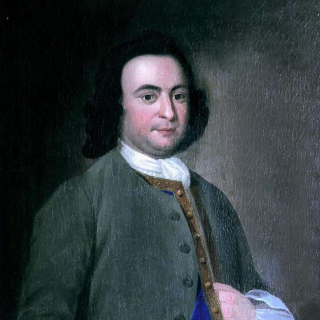
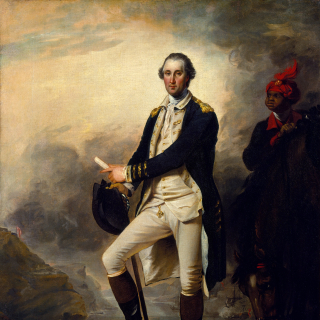
When one thinks about George Washington they probably think of the general that led America to victory in the Revolutionary War or the first president of the United States. What they may not think about is someone with a sometimes complicated relationship with his mother.
In 1787, with the new nation's government on the brink of collapse, a convention was called in Philadelphia to revise the Articles of Confederation. What came out of it was a new Constitution — and lasting damage to the longstanding friendship between George Washington and George Mason.
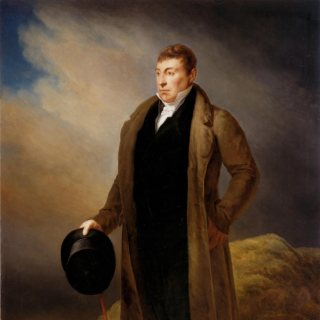
During the Revolutionary War, General Lafayette fell in love with America. He returned in 1824 at the invitation of Congress to do a victory tour of the nation he helped to free. Though he visited every state in the union, the people of Washington, D.C. were determined that his time in their city be extra special.
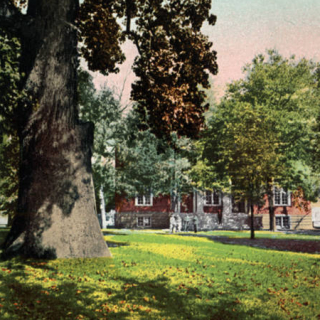
During the Revolutionary War, many communities adopted Liberty Trees -- living symbols of opposition to British rule. The trees became a target for destruction by British soldiers, but unlike many other cities, Annapolis never fell under British control during the war—meaning the Liberty Tree survived the war unharmed. It was a silent witness to the birth of a new nation and survived until 1999, the last surviving colonial Liberty Tree.
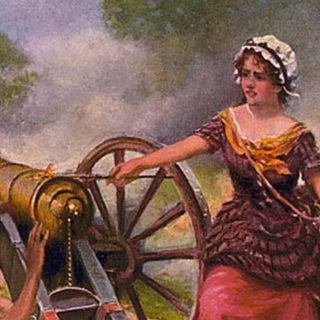
Though they may fall by the wayside of textbooks, without the efforts American women made toward the Revolution, the Continental Army would have been in dire straits indeed. Luckily, the women of Maryland and Virginia met the challenges of supply shortages, low morale, and lack of funds with determination and patriotism.
George Washington's enslaved valet William Lee accompanied the General to every encampment and battle during the American Revolution. But, until recently, history has largely forgotten him.
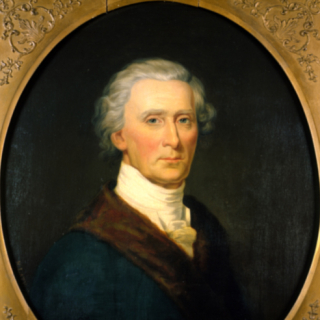
Charles Carroll of Carrollton, a wealthy Maryland statesman was the last surviving signer – and only Catholic signer – of the Declaration of Independence. He lived to age 95, passing away on November 14, 1832. After the deaths of John Adams and Thomas Jefferson in 1826, Carroll became the final living link to the founding generation. His death marked the end of an era when the nation's birth could still be recalled by one of its original framers.
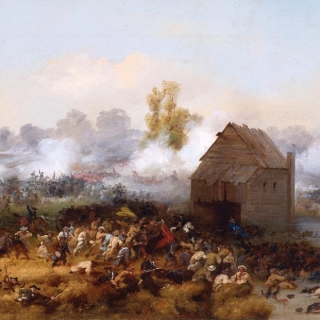
America might not have existed long without the heroic sacrifice of a small group of Marylanders on August 27, 1776. That late summer day men of the First Maryland Regiment found themselves surrounded and hopelessly outnumbered by British forces during the Battle of Brooklyn (also called the Battle of Long Island), the largest battle of the Revolutionary War, fought just weeks after the signing of the Declaration of Independence.
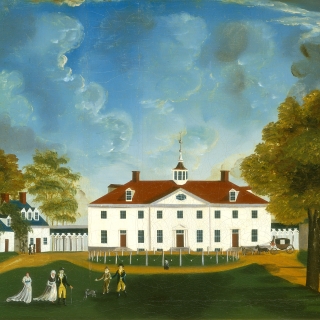
Through the first five years of the Revolutionary War, the beloved home of George Washington has managed to remain out of harm's way. But as winds sweep inland along the Potomac, British ships start to stalk upriver. From the windows of Mount Vernon, the household can see homes and plantations burn on the Maryland shore. Then, the warships turn their guns toward General Washington's home.
Hercules Posey is considered one of America's first celebrity chefs. He was enslaved to George Washington during his presidency but ultimately able to make his escape. The details of his story haven't always been so clear though.


![Sketch of the mythical fuan by Pearson Scott Foresman. [Source: Wikipedia]](/sites/default/files/styles/crop_320x320/public/2023-10/Goatman_Wikipedia_Faun_2_%28PSF%29.png?h=64a074ff&itok=C9Qh-PE1)