In the middle of the Cold War, the United States and the U.S.S.R. managed to find one thing they could agree on: culture. In 1958, the two countries reached an agreement which allowed each to send students, scientists, and performers to the other country to exchange new ideas and technologies. The initial agreement, made during the space race and just a few years before the Cuban Missile Crisis, would eventually facilitate an exchange of 1,700 individuals. Arena Stage became a part of that exchange in 1973 when they traveled to Moscow and Leningrad.
When President Donald Trump's wife, Melania, stayed in New York during the beginning of his presidency, some speculated that the President's daughter, Ivanka, might take on some of the traditional duties of the First Lady in Washington. Some worried this would be another break from tradition by America’s unconventional 45th president; however, there have been numerous other times in US history when the ‘First Lady’ has been a woman other than the president’s wife. Sometimes, it’s because the president is a bachelor or a widower; other times, the First Lady is too ill to fulfill her duties as hostess and appoints a substitute. Or, as often seemed the case in the 19th century and perhaps now, the president’s wife took one look at the job and said “No, thank you!”
American commerce and invention suffered a terrible blow on December 15, 1836, when the U.S. Patent Office caught fire. The office, which was located in Blodget’s Hotel on E Street NW between 7th and 8th Streets, shared its space with the U.S. Post Office and a branch of the local fire department, of all things. Unfortunately, that volunteer fire department had disbanded and the only way to fight the flames was a bucket brigade. When the fire was finally doused, America lost an estimated 7,000 models and 9,000 drawings of pending and patented inventions.
As the presidential election of 1828 approached, the nation’s emotions were running high. Andrew Jackson, the former Governor of Tennessee, was to challenge incumbent president John Quincy Adams. This was a partial rematch of the controversial four-way contest of 1824. Jackson won the most popular and electoral votes, but because no candidate won a majority, the election went to the House of Representatives, who chose second-place finisher John Quincy Adams. Jackson and his supporters were furious. Calling it the “Corrupt Bargain,” Jackson’s supporters accused fourth-place candidate Henry Clay of selling his supporters to Adams for the job of Secretary of State. This set the stage for the most vicious campaign ever seen at that point in American history.
When Thomas Jefferson took office in 1801, he decided he was going to do away with all the courtly nonsense of his predecessors, George Washington and John Adams. No longer would there be rules and regulations dictating behavior in social situations; not a single whiff of pomp or circumstance would be found in his administration. It was a rude awakening for visiting dignitaries including British minister Anthony Merry.
On August 4, 1976 cowboys from the American Southwest section of the Smithsonian’s annual Festival of American Folklife were in the middle of demonstrating a calf roping technique when a 400-pound bull calf "made him a hole" in the corral fence and took-off from the Festival site into lunch-hour traffic.
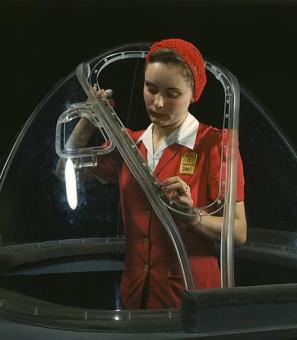
World War I fueled a rapid buildup in industrial production and, in particular, merchant shipbuilding. America needed cargo vessels—fast—and, as luck would have it, Alexandria was prepared. Between 1910 and 1912, the Army Corps of Engineers had infilled a 46-acre bay and wildlife preserve – Battery Cove – near Jones Point Lighthouse. The land’s proximity to the Potomac River and its enormous size made it an ideal site for shipbuilding. Alexandrians rejoiced when the Virginia Shipbuilding Corporation came to their city but the enthusiasm would not last.
In the fall of 1918, a deadly influenza epidemic raged in Washington, D.C. Entire families were wiped out; some people died within a day of showing symptoms. City officials, meanwhile, had a difficult job: figuring out what to do with the bodies.
The St. Asaph racetrack in Alexandria was a hotbed of gambling at the turn of the century, and local prosecutor Crandal Mackey made it his personal mission to shut the track down. But that was easier said than done as the track's owners concocted elaborate schemes to outwit authorities and circumvent Virginia's anti-gambling statutes.
In the years leading up to the Civil War, the debate over the future of slavery raged through the halls of Congress. Abolitionists in the North, however, had little faith that their fight could be won through political discourse. A quarter of Washington, D.C.’s black population was enslaved, and the slave trade in the District was one of the most lucrative markets in the country. Abolitionists reasoned that they needed to resort to other means to combat slavery in this socially hypocritical and politically entrenched environment. In the early months of 1848, a local cell of the Underground Railroad devised a plan to smuggle slaves out of the area and take them north to free territory.