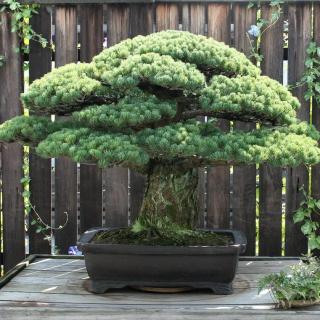
On the eve of the American Bicentennial, bonsai master Masaru Yamaki donated his 350-year-old Japanese white pine to the U.S. National Arboretum. No American knew of its true history until in 2001, when two brothers flew from Japan to find the tree their family had nurtured for generations. The story they shared was nothing short of incredible. The Yamaki pine wasn't just an artistic masterpiece, it was a survivor of nuclear war, and one man's gesture of forgiveness to the country that almost killed him.
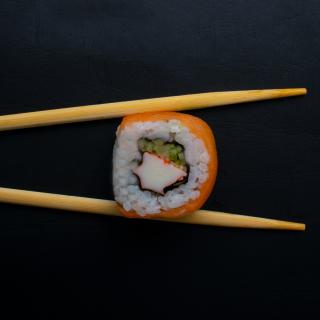
When Japanese immigrant Kojiro Inoue first moved to the Washington area in 1971, D.C. had some Japanese restaurants but couldn’t boast of any that offered sushi. It was for good reason—hardly anyone seemed interested in the idea of eating raw fish. “Sushi wasn’t popular,” explained Inoue to The Washington Post years later. So when Inoue decided to start a small sushi bar within Sakura Place, a Japanese restaurant in Silver Spring, the endeavor wasn’t without its risks. However, Inoue saw potential.
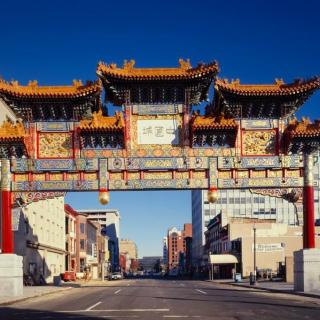
In addition to tours of the Great Wall and the Ming Tombs, former D.C. mayor Marion Barry’s trip to China in May 1984 involved talks with Beijing mayor Chen Xitong about constructing a symbol of the friendship between the two capital cities in the form of an archway in D.C.’s Chinatown.
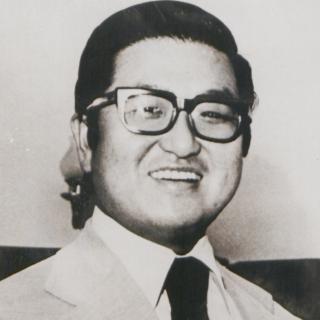
Depending on how you look at it, the 1976 Koreagate scandal didn’t really start with Tongsun Park. But when the media caught wind of “the most sweeping allegations of congressional corruption ever investigated by the foreign government,” Tongsun Park’s charm and personality made him an entertaining antagonist. Part of the intrigue was that Park’s story didn’t conform to the stereotypical immigrant narrative. Park, born in 1935, grew up with wealth. By the 1970s, Park’s opulence – “expensive homes, lavish Embassy Row parties, worldwide jet travel and purchase of his own downtown office building” – made him a Washington celebrity, the District’s “Asian Gatsby.”
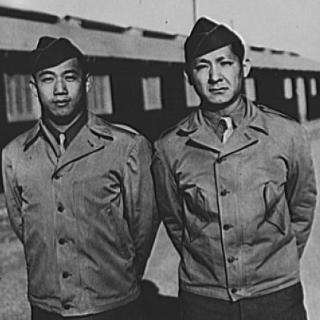
As the new PBS documentary Asian-Americans notes, many Asian-American immigrants maintained strong bonds to their home countries and were deeply affected by World War II conflicts that occurred in the Pacific theater. In fact, even before U.S. involvement and the Japanese attack on Pearl Harbor in 1941, Asian-Americans from the D.C. area closely followed the brewing conflict between China and Japan. Many still had close relatives in China, and Japanese imperialist expansion into China and the resulting Second Sino-Japanese War moved Chinese-Americans at home to organize. On July 7, 1938, in recognition of the one year anniversary of the war’s outbreak, D.C. Chinatown's shops and restaurants closed as the Chinese community gathered in the streets.
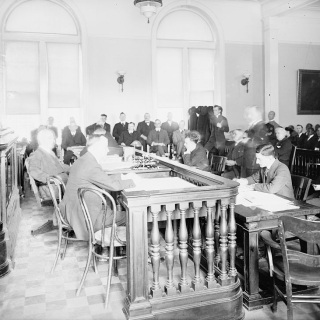
As far as Chinese immigrants go, Dr. Theodore Ting Wong, Chang Hsi Hsie, and Ben Sen Wu were doing alright for themselves. All three were well educated, hailed from affluent Chinese families, spoke nearly fluent English, and served as diplomats for the Chinese Legation. Ushering in the Chinese New Year on the evening of January 29, 1919, the three men had much to celebrate and even more work to get to the next day. But by morning, the mission house was eerily quiet. The postman rang the doorbell in vain; the milk delivery was left sweating on the stoop; the laundry package sat unattended by the door. Concerned, a neighbor entered the house through an open window. What he found sparked a case that would headline papers for years, reach the Supreme Court, and even pave the way for our “right to remain silent.” It was January 31, 1919, and the three residents of the mission had been dead two days.
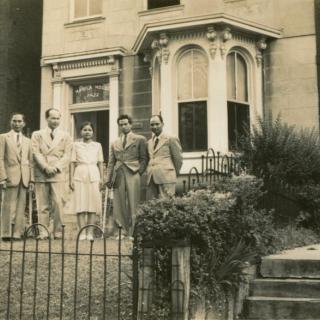
2422 K St. NW, nestled in the Foggy Bottom neighborhood just down the street from the George Washington University, looks like any other D.C. row house. But for the Filipino community in D.C. during the 1930s through the 1950s, it was a haven — a source of culture, community, and comfort. As those who remember it fondly today can testify, 2422 K St. NW wasn’t just a row house; it was the Manila House.
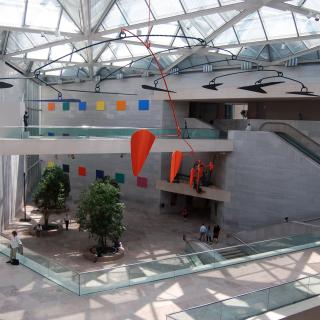
When I.M. Pei, the celebrated Chinese-American architect from New York, was selected to design a new addition for D.C.’s National Gallery of Art, the Washington Post’s architecture critic remarked it was “no doubt one of the toughest [assignments] since Michelangelo was asked to put a dome on St. Peter’s.” Pei knew it would be a difficult task to build the new gallery, but that did not deter him. This is the story of how one of Washington's most unique buildings came to be.
"Having once acquired the taste for playing, a frenzy creeps over one and you seek opportunities for playing the game like a thirsty man. ... Time means nothing. ... midnight passes by unnoticed."
The symptoms sound familiar. But, nearly 100 years before anyone dreamed up Pokemon Go – or smartphones for that matter – another craze was taking D.C. by storm: Mah Jongg.
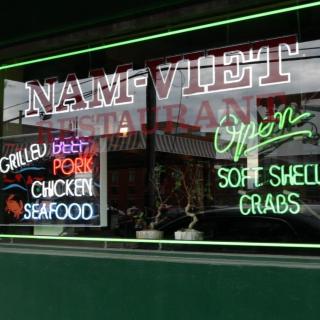
For about 10 years following the fall of Saigon in April 1975, Arlington, Virginia became a destination for Vietnamese immigrants fleeing communist rule. Then, almost as quickly as it had developed, Arlington's so called "Little Saigon" faded away.


![Sketch of the mythical fuan by Pearson Scott Foresman. [Source: Wikipedia]](/sites/default/files/styles/crop_320x320/public/2023-10/Goatman_Wikipedia_Faun_2_%28PSF%29.png?h=64a074ff&itok=C9Qh-PE1)