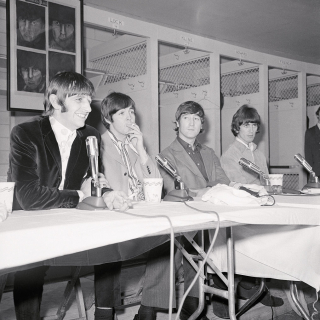
It's hard to imagine that anyone would think the Beatles might not be a big enough concert draw. But when Harry G. Lynn, owner of the old Washington Coliseum at 3rd and M streets NE, was approached by local radio station WWDC in late 1963 about the possibility of booking the then-nascent British pop music sensations for their debut U.S. concert on Feb. 11, 1964, he wasn't convinced that he would be able to sell the 8,000-plus tickets that it would take to fill his arena.
Poland’s famed pianist and one‑time prime minister died in New York in 1941 and was honored at Arlington National Cemetery. His coffin stayed in the USS Maine vault for 51 years before returning to a free Poland in 1992.
In 1914 Arlington National Cemetery unveiled a towering Confederate monument. At the time, advocates framed it as an effort toheal a divided nation but at the same time, the memorial was steeped in Lost Cause imagery. A century later its presence—and removal—became a flashpoint in America’s reckoning with race and memory.
At Arlington National Cemetery, one of the most haunting features is the Tomb of the Unknowns, also known as the Tomb of the Unknown Soldier. On the rear of the monument, there's a haunting inscription: Here rests in honored glory, an American soldier known but to God. But the story of how the first official unknown soldier from World War I was selected for burial in the graves alongside the monument is a strange one. For one, he wasn't actually the first unidentified casualty to be entombed at Arlington.
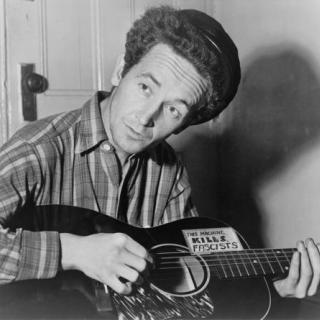
Pete Seeger was a performer whose art was intertwined in close harmony with a slew of social causes, ranging from civil rights and the organized labor movement to environmentalism. While Seeger lived most of his life in upstate New York, Seeger's twin passions for music and activism often brought him to Washington, where his calm eloquence and forthrightness gave him influence in the White House — and also subjected him to peril.
On January 28, 1962, Washington's original streetcar system road the rails for the final time. That last run ended 99 and a half years of service to the nation's capital as buses replaced the trolleys as the primary means of mass transit in the District. So, how did we get to that point?
For decades, streetcars were the backbone of Washington, D.C. transit. But in the 1950s, the system started to come undone due to politics, labor strife, and tanking ridership. On January 28, 1962, D.C.'s streetcar made its last, funeral‑like run.
There have certainly been worse fires, but the Willard Hotel blaze of 1922 caused quite a stir. It resulted in $400,000 — about $5,400,000 today — in damages to the grand hotel and sent some of the District's most distinguished citizens and guests out into the street in their pajamas. Some just moved a little more quickly than others. Apparently, emergency procedures were a little different back then.
J.D. Salinger, one of the most important American writers of the 20th century, was deeply influenced by Indian philosophy and religion. But that spiritual quest, curiously, led him to not to Varanasi or some other city in India, but to Washington, D.C.
On August 8, 1873, a steamboat ride down the Potomac turned into a nighmare when a fire broke out on the Wawaset. Panic, sinking lifeboats, and harrowing rescues left Washington reeling.
In 1973,The Exorcist, was a box office smash. Set in D.C., the film chronicles a Roman Catholic priest's struggle to save a 12-year-old girl from demonic possession. But The Exorcist has another, even more unsettling connection to the Washington area. William Peter Blatty, who wrote both the screenplay and the bestselling 1971 novel from which it was derived, was inspired by an actual case in which a 14-year-old Prince George's County boy was purportedly was possessed by the devil.
We look back at the life and vision of Elizabeth Campbell, WETA's founder and a pillar in the Washington, D.C. area community. Thank you for everything, Mrs. Campbell. We still feel your impact today.