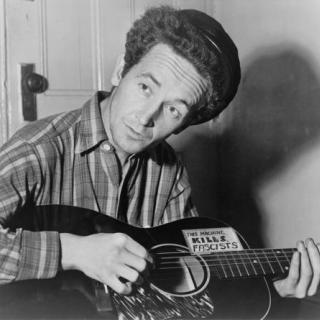
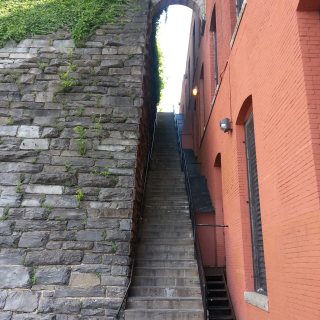
Velvet Underground singer and guitarist Lou Reed is best known as a lyrical chronicler of New York City's debached avant garde subculture of the 1960s. But Reed also could claim an intriguing distinction in the musical history of the nation's capital. The Rock and Roll Hall of Fame inductee once was called upon to provide musical entertainment at the White House, at the request of a visiting foreign head of state.
When Orson Welles’ 1938 broadcast of the War of the Worlds hit the airwaves on WJV, Washington erupted with fear, rumors, and frantic calls. Panic spread through neighborhoods and newsrooms as listeners searched for confirmation, prompting officials to scramble with reassurances.
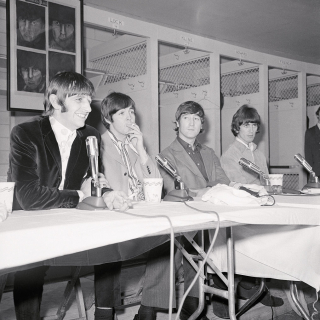
From Charlie Parker and Duke Ellington to the Beatles’ riotous 1964 U.S. debut—when fans pelted the band with jellybeans—the Uline Arena hosted decades of musical milestones.
If you ride the Red Line Metro, you've probably seen it out the window at the New York Avenue stop: A massive, rust-colored structure with a curvilinear-trussed roof. It looks like an abandoned warehouse or factory, or a repair shop for ancient locomotives. You’d probably never suspect that 50 years ago in February, the Beatles played their first U.S. concert there. It also was the home of Washington’s first NBA team, and hosted events ranging from figure skating and midget auto racing to Dwight Eisenhower’s 1957 inaugural festival and a 1959 speech by Nation of Islam founder Elijah Muhammad.
Given that he was a pretty important fellow with a busy schedule, it’s also no surprise that J.P. Morgan didn’t want to waste a lot of time in transit between D.C. and New York. After all, he had deals to strike, businesses to reorganize and railroads to consolidate amongst other items on his “to-do” list. And so, on January 23, 1911, Morgan took it upon himself to set a new world record for rail travel between D.C. and the Big Apple.
When the British burned Washington in August 1814, the Senate decamped to Blodgett’s Hotel — a tavern‑by‑day turned temporary Capitol. In the weeks that followed, the tavern hosted debates over whether the Federal government should rebuild or abandon D.C. altogether.
Luis Araya, immigrated to Arlington from Bolivia as a young boy in 1966, when very few Latinos lived in the county. He's worked for the county government for 40 years and he also happens to be a Director at the Arlington Historical Society. So he brings an interesting perspective on the experience of Latinos in Arlington over time.
What better treat for a president-elect waiting to move into the White House than to stay in one of the swankiest hotels in the capital? Well, as it turns out, James Buchanan would have done better to have found less plush accomodations in the spring of 1857. He and hundreds of others fell victim to a mysterious ailment after staying at the luxurious National Hotel. Was it poison or just bad luck?
A complicated sense of honor can get you killed. That’s why people like John Randolph of Roanoke update their wills before engaging in potentially suicidal duels, like the one Randolph had with Henry Clay in 1826. And, boy was Randolph’s idea of honor super complicated.
Though he was the grandson of a Klansman, Bob Zellner realized at a young age that he didn't agree with segregation. As a young man, he joined the Student Nonviolent Coordinating Committee (SNCC), and became the first white southerner to be a SNCC Field Secretary. In a time of high tensions, particularly in the Deep South, Zellner and his wife Dorothy held their ground as supporters of black freedom and desegregation. They traveled from Danville, Virginia for the March on Washington. Years later, Zellner remembered the experience.
On the days leading up to the March on Washington, buses from every direction poured into the District of Columbia. Culie Vick Kilimanjaro and her husband John Marshall Kilimanjaro came from Greensboro, North Carolina. No one knew exactly what to expect prior to the March. Many feared violence. Many feared that no one would show up and the March would be a bust.
It's DC Beer Week and there are a lot of interesting activities going on around town where you can enjoy some great craft beer. It's a cool annual event, but not normally something that we would cover on Boundary Stones. But, thanks to the Heurich House Museum, DC Brau and local homebrewer Mike Stein, this year's beer week is also a celebration of local history!