Two hundred years ago, an unknown woman breathed her last in room 8 of Gadsby’s Tavern in Old Town Alexandria. Her husband prepared her body for death in secret and sealed her coffin personally. After seeing that she was placed in a local graveyard, he vanished.
Today, Wolf Trap National Park for the Performing Arts is a mainstay of Washington, D.C.’s cultural life. The park’s large outdoor auditorium and beautiful green space play host to a variety of performers.
For John Richardson, Washington’s influential territorial governor, Alexander Robey “Boss” Shepherd, has been a source of fascination for over 30 years, since the author moved into D.C.’s Shepherd Park neighborhood.
Rose O'Neal Greenhow hosted some of the most prominent politicians of her time in her house on 16th Street. At the beginning of the Civil War, she turned it into a hub of Confederate espionage. Then, it became a Union prison.
In 1871, the city of Washington was taken up in a scandal of police brutality, perhaps one of the earliest in the city. At the center of the storm was an Irish policeman, a toddler, and Walt Whitman.
When Thomas Jefferson took office in 1801, he decided he was going to do away with all the courtly nonsense of his predecessors, George Washington and John Adams. No longer would there be rules and regulations dictating behavior in social situations; not a single whiff of pomp or circumstance would be found in his administration.
In 1910, the Howard Theater was founded in Washington's Shaw neighborhood, and it soon became the premier black theater in the country, helping launch the careers of many African American performers.
You’re sixteen years old, caught up in the intoxicating freedom that comes with your new driver’s license, and it’s Halloween night. You and your friends are driving around your small town looking for a quiet place far away from adult supervision. You decide to park on the side of the road near a secluded railway overpass.
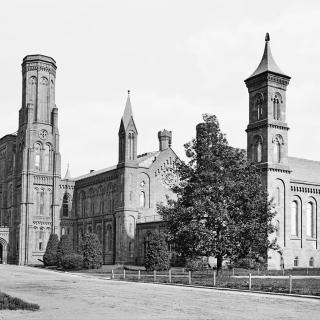
In January 1967, after just a few months on the job as the Smithsonian's Director of Museum Services, Jim Morris had an idea. What if the Smithsonian were to put on an outdoor festival in Washington to exhibit and celebrate folk traditions from around the nation?
Prior to 1909, Harry Bradford had almost never landed himself in the paper. He appeared in The Washington Post once, when it announced that the Kensington Orchestra was going to be performing in the near future. (Bradford played violin.) But other than that, nothing.