Woodrow Wilson's 1919 stroke had a devastating effect on his ability to serve as president. His wife, Edith, stepped up as nurse and politician, making her arguably America's first female president.
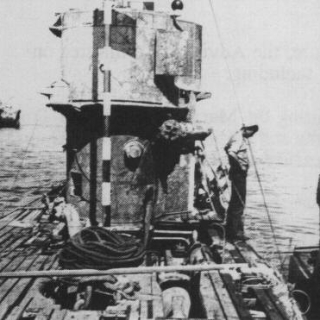
Just 80 miles south of Washington, D.C., in the brackish waters of the Potomac River, sits one of the most peculiar shipwrecks of World War II. Resting on the river bottom about a mile offshore from Piney Point, Maryland, partially obscured by silt, is the U-1105, a one-of-its-kind German U-boat known in its day as “Black Panther” that stalked Allied ships in the final days of the war.
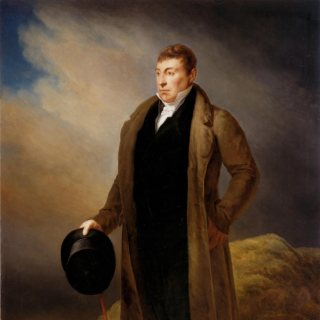
During the Revolutionary War, General Lafayette fell in love with America. He returned in 1824 at the invitation of Congress to do a victory tour of the nation he helped to free. Though he visited every state in the union, the people of Washington, D.C. were determined that his time in their city be extra special.
As a closeted lesbian in the 1960s, emotions of isolation, grief, and depression nearly drove Lilli Vincenz to suicide in her early twenties. But after being outed by a roommate and joining a gay rights organization, Vincenz worked tirelessly to prevent other gay, bisexual, and questioning women from feeling the same shame and loneliness. Key to her efforts (and beloved by its attendees) was the Gay Women's Open House, which operated out of her home for nearly a decade. This safe, nonjudgemental space to gather, converse, and laugh could be life-changing for its attendees.
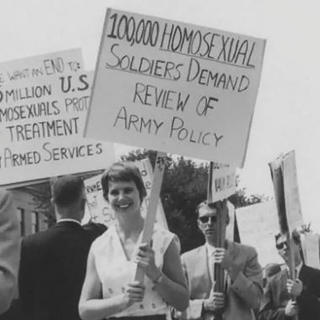
The “Lavender Scare” forced thousands of gay and lesbian federal employees from their jobs in the late 1940s through the 1960s. But in Washington, the Mattachine Society fought back.
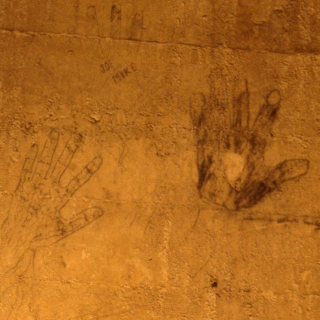
Beneath the Lincoln Memorial's gleaming marble columns lies a vast hidden basement — complete with century-old worker graffiti, naturally formed stalactites, and a tiny ecosystem that thrived undisturbed in the dark for decades.
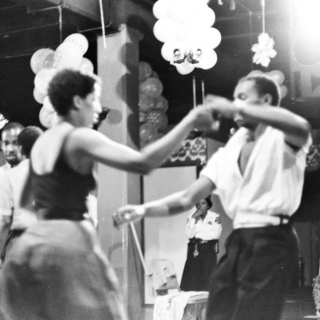
During the AIDS crisis of the 1980s, The ClubHouse and other LGBTQ+ nightclubs in DC provided a space for political activism and social support for the gay Black community.
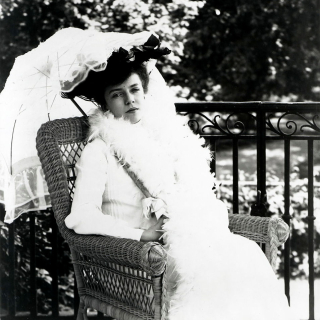
Washington, DC, has been home to countless larger-than-life political figures. But perhaps no other Washingtonian has had such a long-lasting—and underappreciated impact—on American popular culture and politics as Alice Roosevelt Longworth, the eldest child of President Theodore Roosevelt.
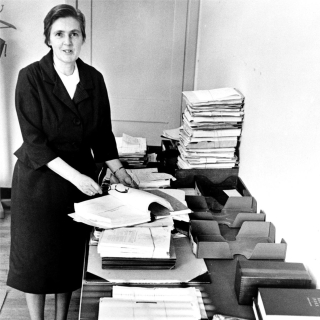
In 1960, a new drug called thalidomide arrived for review at the FDA. Assuming the popular European drug would be a routine application, supervisors assigned its approval to their newest hire, Dr. Frances Kelsey. The drug's manufacturers claimed total safety and zero side effects, but Dr. Kelsey stood firm, demanding clinical data to prove their claims. And, in doing so, saved the United States from a public health catastrophe.
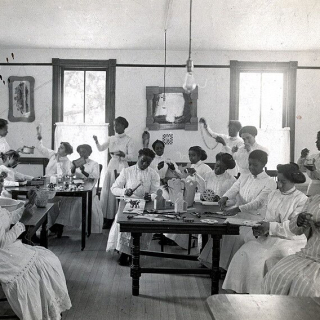
Despite the intense application process and the curriculum’s rigorous Baptist philosophy which left little room for error, a diploma from the National Training School for Women and Girls opened doors once unimaginable to its students. Its principal and founder, Nannie Helen Burroughs, was no less intense, trailblazing, and ingenious herself.
Though Rosa Parks may be the face of peaceful resistance to segregation on public transportation, she was not the first to adopt the strategy. Claudette Colvin, Ellen Harris, Maggie Lena Walker, Ida B. Wells, and Charlotte Brown are just some of the individuals who took a stand against racist policies enacted after the Civil War. In Washington, D.C., one of these civil rights activists whose name has been almost forgotten was Barbara Pope. In 1906, she claimed her right to remain in the first-class seat which she had paid for, rather than be moved to the segregated car.
Washington, DC, has a rich baseball history stretching back over 160 years. But long before the Nationals and Senators of Major League Baseball and the Negro leagues’ Homestead Grays won over legions of fans, famed abolitionist Frederick Douglass’s son Charles paved the way for black ballplayers in the District.


![Sketch of the mythical fuan by Pearson Scott Foresman. [Source: Wikipedia]](/sites/default/files/styles/crop_320x320/public/2023-10/Goatman_Wikipedia_Faun_2_%28PSF%29.png?h=64a074ff&itok=C9Qh-PE1)