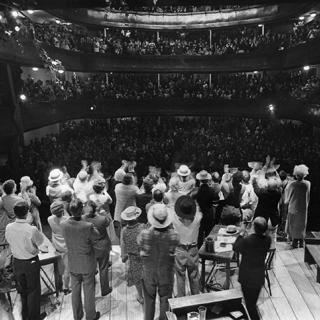
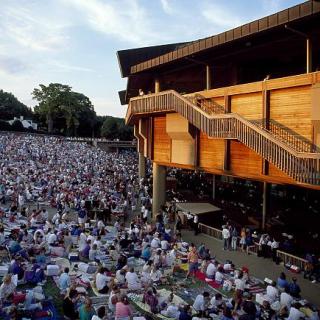
In the middle of the Cold War, the United States and the U.S.S.R. managed to find one thing they could agree on: culture. In 1958, the two countries reached an agreement which allowed each to send students, scientists, and performers to the other country to exchange new ideas and technologies. The initial agreement, made during the space race and just a few years before the Cuban Missile Crisis, would eventually facilitate an exchange of 1,700 individuals. Arena Stage became a part of that exchange in 1973 when they traveled to Moscow and Leningrad.
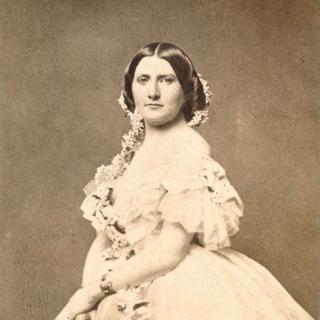
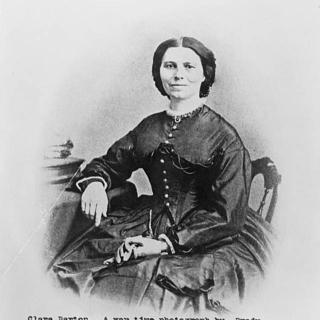
When President Donald Trump's wife, Melania, stayed in New York during the beginning of his presidency, some speculated that the President's daughter, Ivanka, might take on some of the traditional duties of the First Lady in Washington. Some worried this would be another break from tradition by America’s unconventional 45th president; however, there have been numerous other times in US history when the ‘First Lady’ has been a woman other than the president’s wife. Sometimes, it’s because the president is a bachelor or a widower; other times, the First Lady is too ill to fulfill her duties as hostess and appoints a substitute. Or, as often seemed the case in the 19th century and perhaps now, the president’s wife took one look at the job and said “No, thank you!”
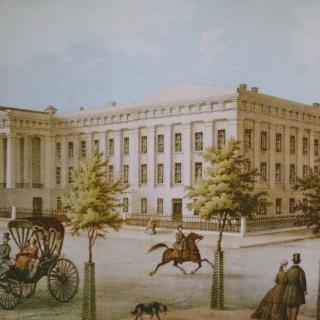
American commerce and invention suffered a terrible blow on December 15, 1836, when the U.S. Patent Office caught fire. The office, which was located in Blodget’s Hotel on E Street NW between 7th and 8th Streets, shared its space with the U.S. Post Office and a branch of the local fire department, of all things. Unfortunately, that volunteer fire department had disbanded and the only way to fight the flames was a bucket brigade. When the fire was finally doused, America lost an estimated 7,000 models and 9,000 drawings of pending and patented inventions.
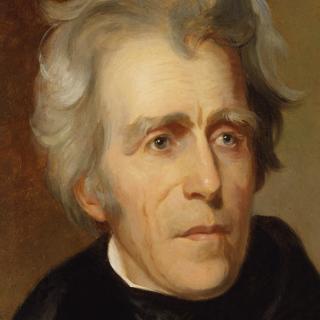
As the presidential election of 1828 approached, the nation’s emotions were running high. Andrew Jackson, the former Governor of Tennessee, was to challenge incumbent president John Quincy Adams. This was a partial rematch of the controversial four-way contest of 1824. Jackson won the most popular and electoral votes, but because no candidate won a majority, the election went to the House of Representatives, who chose second-place finisher John Quincy Adams. Jackson and his supporters were furious. Calling it the “Corrupt Bargain,” Jackson’s supporters accused fourth-place candidate Henry Clay of selling his supporters to Adams for the job of Secretary of State. This set the stage for the most vicious campaign ever seen at that point in American history.
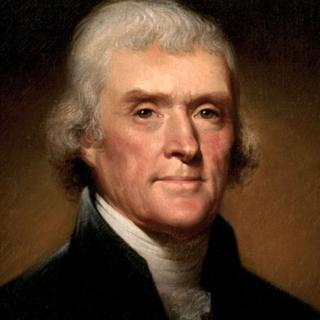
When Thomas Jefferson took office in 1801, he decided he was going to do away with all the courtly nonsense of his predecessors, George Washington and John Adams. No longer would there be rules and regulations dictating behavior in social situations; not a single whiff of pomp or circumstance would be found in his administration. It was a rude awakening for visiting dignitaries including British minister Anthony Merry.
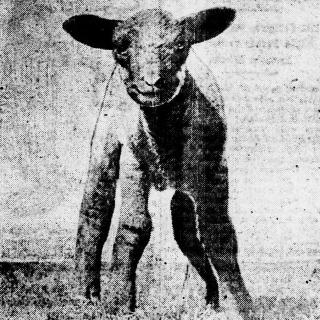
On August 4, 1976 cowboys from the American Southwest section of the Smithsonian’s annual Festival of American Folklife were in the middle of demonstrating a calf roping technique when a 400-pound bull calf "made him a hole" in the corral fence and took-off from the Festival site into lunch-hour traffic.
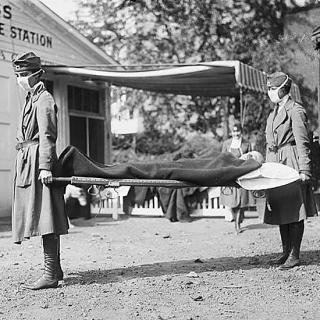
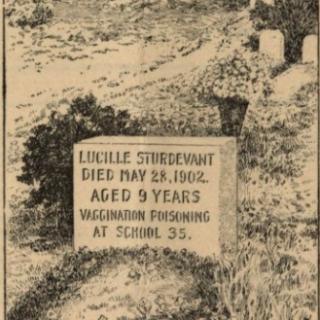
In the fall of 1918, a deadly influenza epidemic raged in Washington, D.C. Entire families were wiped out; some people died within a day of showing symptoms. City officials, meanwhile, had a difficult job: figuring out what to do with the bodies.
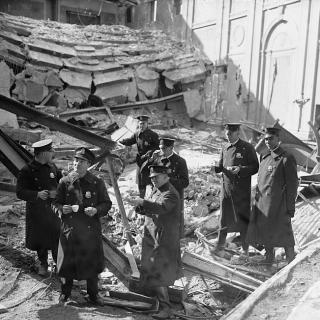
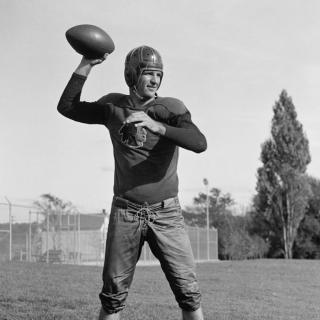
At approximately the same time the Redskins took the field at Griffith Stadium on December 7, 1941, the Japanese attacked Pearl Harbor, Hawaii. As Washington Post columnist Shirley Povich put it, “With America at war and lives already lost, a football game had lost its importance.” That was undoubtedly true... for everyone outside of the stadium. But on the inside, most fans didn’t know anything about the attack – at least for a while – as the team declined to make an official announcement. 75 years later, it remains one of the most peculiar scenes in local history.
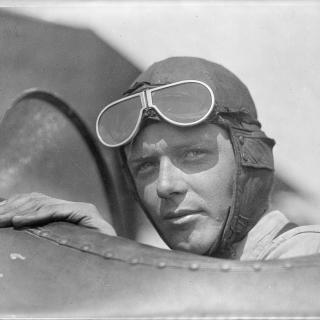
When word came from Paris that Charles Lindbergh successfully completed the first trans-Atlantic flight on May 21, 1927, the world celebrated. Overnight the young pilot became a household name and hero. Cities around the globe prepared to fete him. But to Lindbergh, one greeting stood out in particular, “Paris was marvelous and London and Brussels as well, and I wouldn’t for the world draw any comparisons, but I will say this, the Washington reception was the best handled of all.”
Mike Tyson, the so-called "Baddest Man on the Planet," was known for his antics, in and out of the ring, as much as he was known for his boxing ability. While Tyson's sole fight in the nation's capital isn't his most well-known fight, the bout was certainly historic.
Prior to 1909, Harry Bradford had almost never landed himself in the paper. He appeared in The Washington Post once, when it announced that the Kensington Orchestra was going to be performing in the near future. (Bradford played violin.) But other than that, nothing. And yet, in 1910, Bradford’s name was in all caps on the front page of the Post. “Bradford told to quit,” the headline read.


![Sketch of the mythical fuan by Pearson Scott Foresman. [Source: Wikipedia]](/sites/default/files/styles/crop_320x320/public/2023-10/Goatman_Wikipedia_Faun_2_%28PSF%29.png?h=64a074ff&itok=C9Qh-PE1)