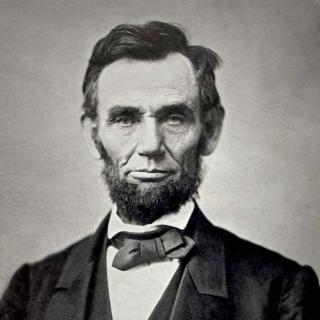
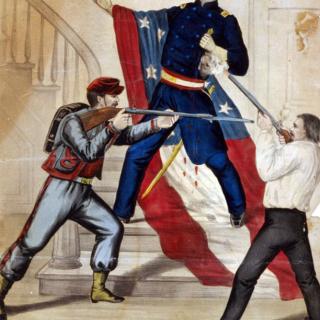
Possibly the toughest part of being a President is having to send U.S. forces into combat, knowing that some of them will not return alive. After the Civil War began in 1861, President Abraham Lincoln had to face that terrible reality very quickly. On the morning of May 24, 1861, a personal friend of the President, Col. Elmer Ellsworth, became the first Union officer to be killed in the conflict in nearby Alexandria, Virginia.
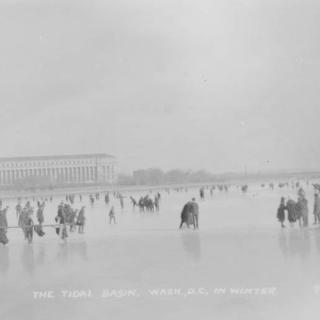
We’ve written earlier about how the Tidal Basin was the site of a popular public beach in the 1920s. In the decade before, however, it hosted another source of popular entertainment: ice skating. In 1912, it was the site of an elaborate “ice carnival,” with thousands of Washingtonians showing up to skate, sled, and have an evening of wintry fun
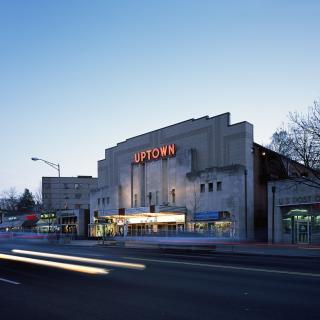
It's hard to imagine now, but when the first Star Wars movie debuted in 1977, few in Hollywood expected director George Lucas' movie to do much business, let alone create pandemonium. The scene at Washington's Uptown Theater proved to be a bellwether of what was to come.
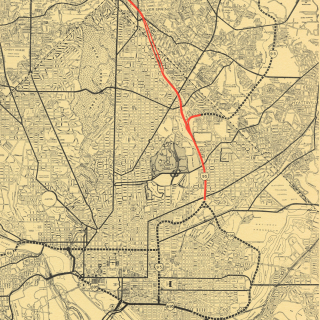
During the morning commute on Metro, trains are packed. A lot of riders are commuters coming in from Maryland or Northern Virginia. The Metro wasn’t the initial plan; back in the 1950s, the plan was to set up a freeway system to make it easier for people in the suburbs to access D.C. But due to the persistence of citizen groups, this was not to be.
Throughout the history of the capital, people have thought of it as ... a pretty bad place, honestly. From Lead Belly in 1937, to Mark Twain and Charles Dudley in 1873, to Nathaniel Hawthorn in 1862, to Byron Sunderland in the 1850s, to Charles Dickens in 1842, to a British Chaplin in the War of 1812, to Abigail Adams in 1800, it seems like pretty much everyone disliked the District. If you don’t want to read one more, skip to the bottom to check out the people who, somehow, against all odds, actually like the city — if not, read on!
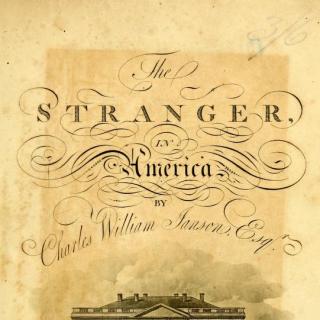
Charles William Janson was an Englishman who lived in and wrote about America from 1793 to 1806. He published the account of his travels in 1807, in The Stranger in America. The following is what he had to say about what was then called “Washington City”...
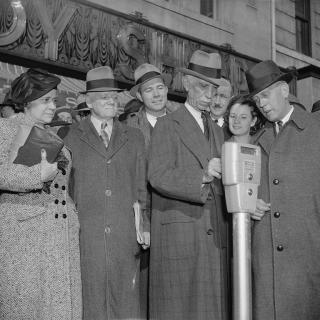
Washington, D.C., has 17,000 parking meters, and the necessity of feeding them is one of those annoyances that urban drivers grudgingly accept. Though it may be difficult to fathom today, there was a time in the early 20th century when the idea of collecting fees for parking spaces was opposed by the American Automobile Association and motorists who saw it as unfair taxation. As a result, it took several years to get approval to install the first meters on District streets.
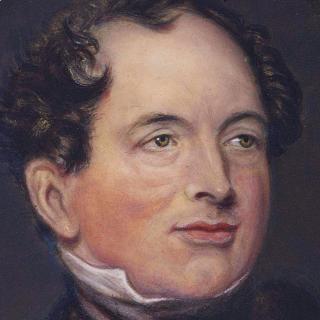
In the wilderness of early Washington, fancy hotels and salons were not yet available for the stars of the city to gather. Instead, prominent citizens gathered in a farmer’s cottage to “discuss crops and drink apple jack.” In 1803, an Irish celebrity joined them around the fire, and immortalized the scenery in verse.
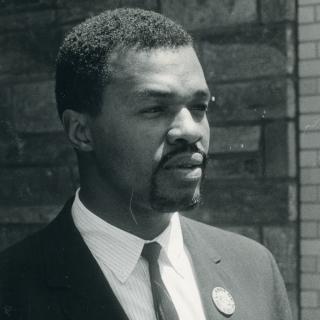
We’ve written before on this blog about the exploits of Julius Hobson. A D.C. civil rights activist in the 1950s, ‘60s, and ‘70s, his campaigns against segregation and injustice were based on equal parts audacity and bluff, ranging from staging a “lie-in” at a D.C. hospital, to encouraging people to paste pro-integration stickers over the punchcards on their power bills, to threatening massive protests and boycotts that had no chance of materializing. He combated police brutality by following policemen around with a long-range microphone, and, most famously, promised to release cages full of rats on Georgetown if the city didn’t deal with the rat problem elsewhere. His antics effected genuine social change, in large part because everyone was too nervous to call him on his bluffs, for fear that he might be able to back them up. His acts were already so outlandish, anything seemed plausible, except for one rumor that seemed to be too uncharacteristic to be true. Yet, it was the truth: for years, Julius Hobson passed information to the FBI.
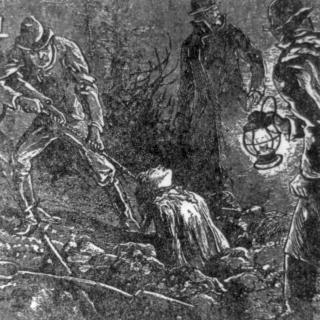
To conclude our series on Washington, D.C.’s professional grave robbers, we’ll focus on one of the most interesting individuals to ever stalk D.C.’s cemeteries, Vigo Jansen Ross. Like most professional grave robbers of the era, information comes mainly from local newspapers. Jansen in particular was quite well known as someone who loved the attention that the media could provide for him. Jansen claimed to have been born in Denmark in the late 1840s or early 1850s. It is unknown when he made his way across the Atlantic to America, but it seems that he studied medicine in his native Denmark and came across the sea to ply his trade in the growing American market. Jansen brought the love of drinking across with him, which destroyed any hope he had of pursuing a career in medicine, forcing him to provide bodies for medical colleges to make a living.
December 13, 1873. The streets of Washington, soupy with mud from the previous day’s rains, began crystallizing with slick patches of ice as the first kiss from winter’s lips touched the city. Despite the oncoming cold, Officer Hawkins remained focused, his suspicions high. Nearby, a horse-drawn wagon and its female occupant continued to sit idle near the circle of 22nd Street. Upon earlier questioning, the young woman claimed she was only waiting for her husband to conduct business in a nearby home. Yet as the minutes ticked past midnight, the hairs on Hawkins’ neck began to stand on end—no honest business took place this late into the night.
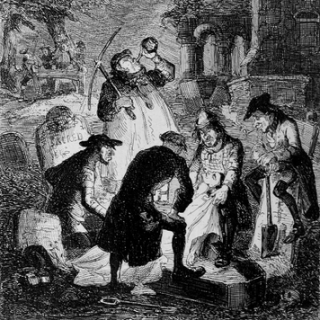
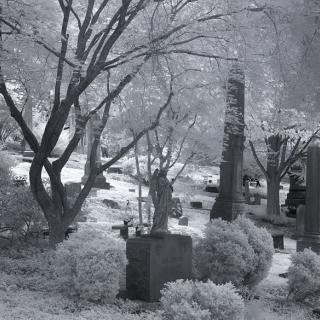
In the late 19th century, the District of Columbia became a hub of grave robbing activity in the United States. Known as “resurrectionists” by the media outlets that covered their deeds, grave robbers haunted Washington’s many graveyards and potter’s fields in the cover of night, acquiring bodies to sell to local medical colleges. Their exploits may be thought of as morbid and disgusting, yet their contribution to modern medical science was an important one.
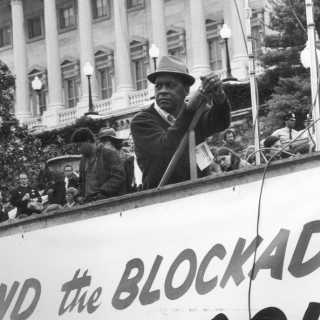
In the fall of 1965, D.C. Transit announced plans to raise bus fares and one man wasn’t having it. Marion Barry would go on to become mayor of D.C., and serve four terms but he wasn’t mayor yet. He was a relatively new resident in D.C., having moved here to open up a local chapter of the Student Nonviolent Coordinating Committee (SNCC). In short order, he organized a bus boycott that launched his career in Washington.


![Sketch of the mythical fuan by Pearson Scott Foresman. [Source: Wikipedia]](/sites/default/files/styles/crop_320x320/public/2023-10/Goatman_Wikipedia_Faun_2_%28PSF%29.png?h=64a074ff&itok=C9Qh-PE1)