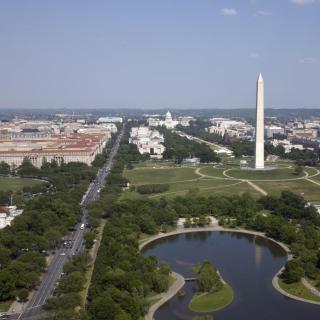
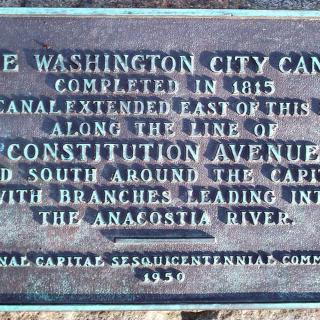
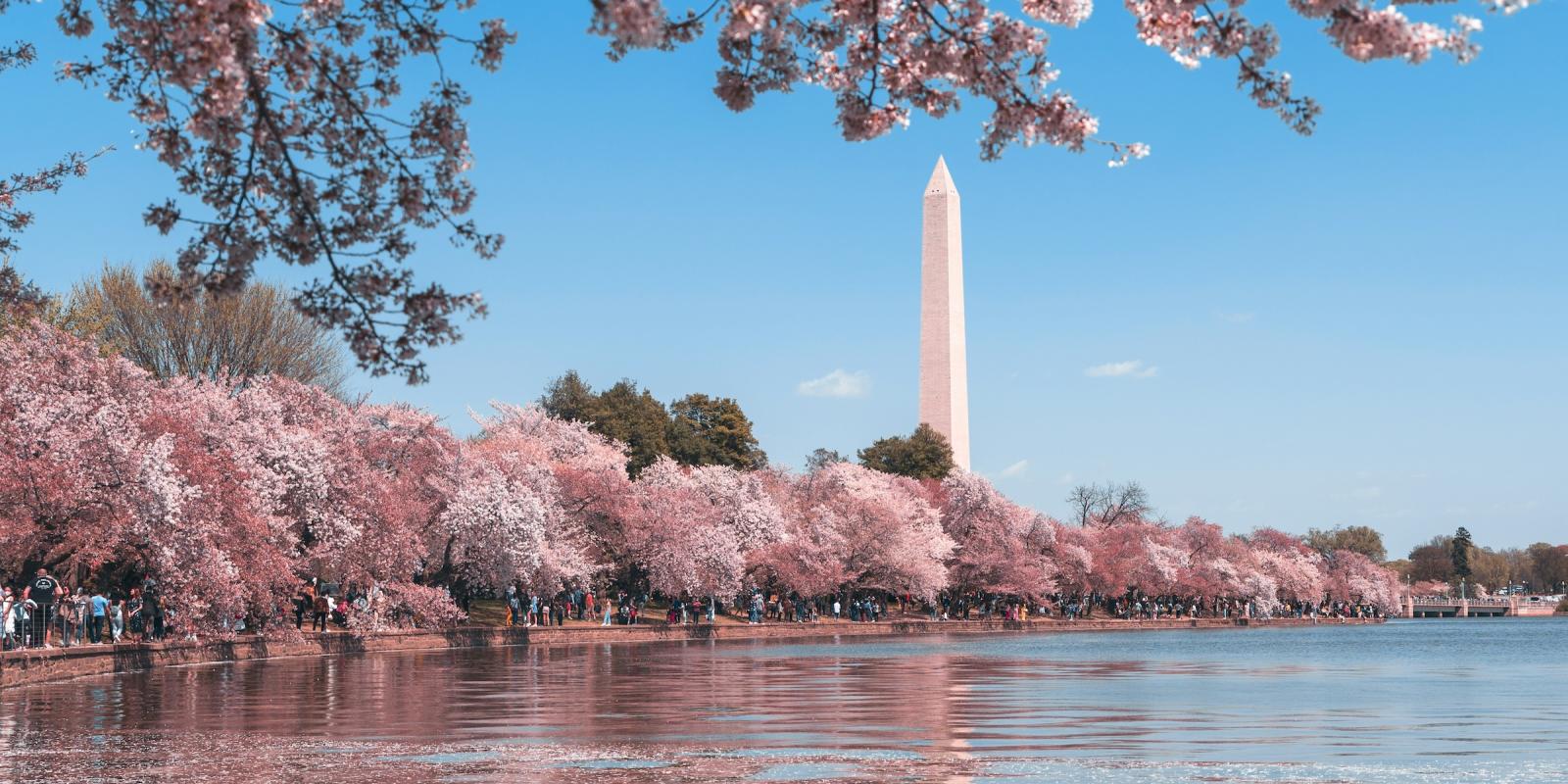
Just within sight of the Washington Monument is a little stone house not open to the public. Used for National Park Service storage today, this house is the last remnant of one of the biggest mistakes in municipal planning in the District’s history: the Washington City Canal.
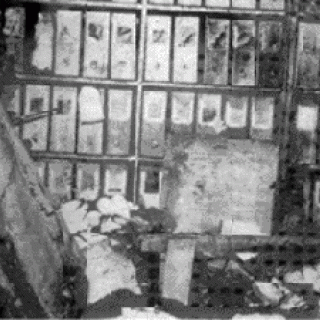
Today, the founding documents of America - the Constitution, the Declaration of Independence, and the Bill of Rights - are on display at the Charters of Freedom exhibit in the Rotunda of the National Archives. Tourists from across America and the world make pilgrimages to see the most revered documents in American history. Extensive preservation measures have been put in place. But this wasn’t always the case. For most of our nation’s history, these charters, now considered priceless, were kept with the United States’ other government documents - that is, shoved wherever officials could find space. Before the National Archives was founded in 1934, these documents were stored essentially at random, in basements, on walls, or even piled in hallways.
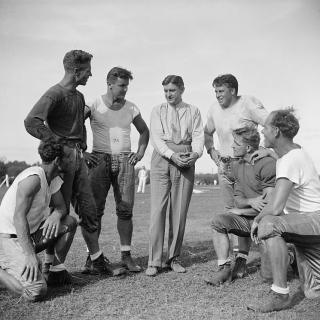
By 1952, every team in the National Football League had African-American players... except one. Washington Redskins (now Commanders) team founder and owner George Preston Marshall refused to integrate and dragged his feet for ten more years until his hand was forced.
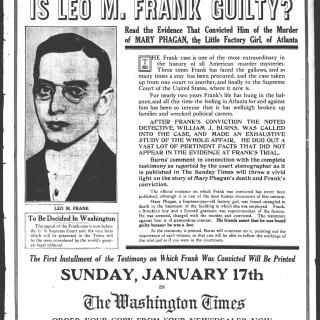
Have you ever heard of Leo Frank? His case, a lesser known piece of American history, had tremendous long-lasting impact on the nation -- leading to the creation of the Anti-Defamation League and reviving the Ku Klux Klan. There’s also a Washington, D.C. connection.
In 1913, Leo Frank, a young Jewish man originally from New York, was accused of murdering Mary Phagan, a 13-year-old girl who worked in the Atlanta pencil factory he managed. After a month-long trial, with prejudice heavy in the air, Frank was convicted and sentenced to death. Due to the judge’s fear of mob violence, Frank and his family were not in the courtroom when the verdict was announced.
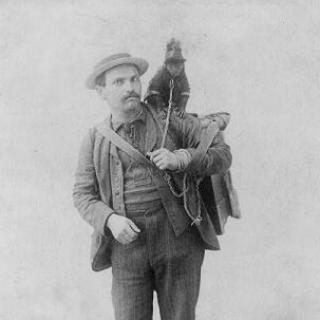
If you're a Peter Sellers fan, you're probably familiar with a scene in the 1975 film Return of the Pink Panther, in which Inspector Clouseau fails to notice a bank robbery because he is questioning a street accordion player and his chimpanzee companion about whether or not they have the required permit. You may not realize that there's a grain of truth in the comedy.
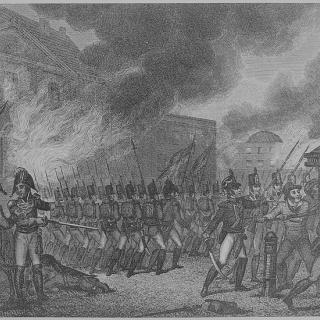
On Aug. 24, 1814, for the first and only time in our country's history, Washington, D.C. was overrun by an invading army. The British army had easily defeated inexperienced American defenders, and set the city ablaze. The President fled to Brookeville, MD, and many of the citizens had fled along with the army. Those few residents of the capital who hadn't already fled may well have prayed for anything that could stop the flames. What they got, however, was something far more than they were hoping for: a "tornado" more powerful than any storm in living memory.
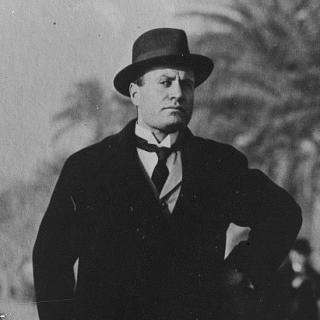
St. Elizabeths Hospital has had its fair share of infamous patients. Would-be Presidential assassins Richard Lawrence and John Hinckley, silent film actress Mary Fuller, and “The Shotgun Stalker” James Swann have all called the psychiatric hospital home. But the building has also had some lesser-known, but equally significant, guests – or at least parts of them. St. Elizabeths quite literally got a piece of Benito Mussolini’s mind when sections of his brain were sent there for research in 1945.That’s right: as literary great Ezra Pound spent time in the Chestnut Ward, a portion of his fascist idol was just next door. And while Pound left after twelve years, the brain remained, shrouded in obscurity, until its eventual disappearance more than twenty years later.
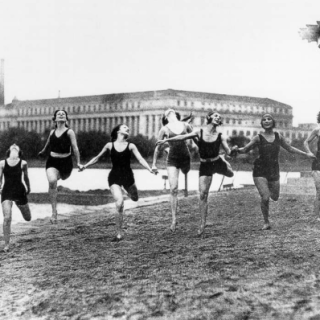
The National Building Museum’s new indoor beach may be making headlines, but it’s not D.C.’s first seashore. For a period of time between 1918 and 1925, Washingtonians dipped into the Tidal Basin to experience some summertime heat relief. Now I know what you’re thinking: you couldn’t pay me to swim in that water today. But with a serious lack of public pools, and no air conditioning, citizens back then were pretty desperate.
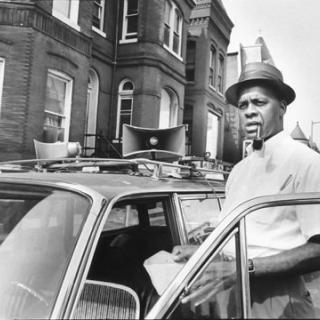
If you lived in DC in August 1964, you might have seen Julius Hobson driving through downtown with a cage full of enormous rats strapped to the roof of his station wagon. Frustrated by the city government’s refusal to do anything about the rat problem in Northeast and Southeast DC, and about the District’s more affluent citizens’ apathy about the issue, he said that if Southeast was having this problem, then Georgetown should share it too. Hobson caught “possum-sized rats” in Shaw and Northeast, and transported them up to Georgetown, promising to release the cage full of rats in the middle of the wealthy district unless the city government acted to curb the epidemic. Since he was, as a piece in The Washingtonian put it, “[a]ware that a DC problem usually is not a problem until it is a white problem,” he decided to go ahead and make it a white problem.
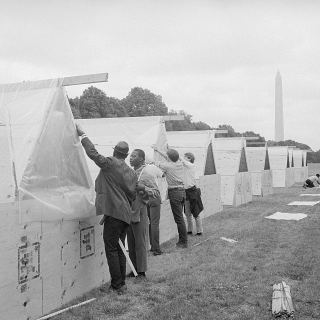
In the early morning hours of June 23, 1968, thick clouds of tear gas rolled through a multitude of shacks on the National Mall. This shantytown was Resurrection City, and its residents were the nation’s poor. As many ran from their shelters, they saw Martin Luther King, Jr.’s final dream of economic equality withering in the gas. They had been citizens of the city for six weeks, all the while campaigning for rights for the poor around D.C. Now their work seemed all for naught. After an increase in violence and with an expiring living permit, the police had come to chase them out. Children were crying, adults screaming, and some were even vomiting. But amid the chaos, a song rang out: “we shall overcome.”
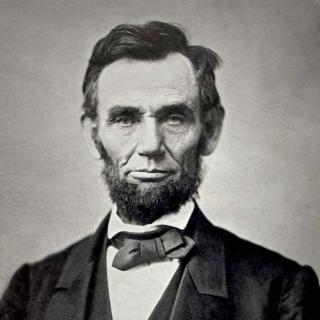
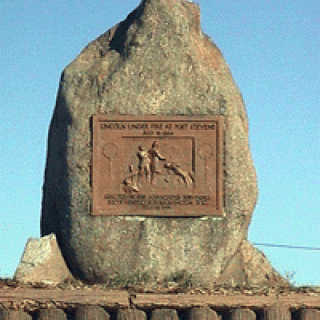
The only time a sitting U.S. President came under enemy fire happened right here in Washington -- at Fort Stevens -- when Confederates under Lt. Gen. Jubal Early advanced on the fort while President Lincoln was there.
Friend of the Blog and Tenleytown, D.C. native Jim Corbley recounts the harrowing incident -- which included some terse words for the President from his aide-de-camp, future Chief Justice Oliver Wendell Holmes -- in this special guest post.
Okay, we admit it. Here at Boundary Stones headquarters we are nerds and we get really excited when we hear about free history talks and lectures. It's like school for adults.
So, as you can imagine, we are very pumped about the D.C. Library's schedule of events for this summer. As part of its summer reading program, DCPL is sponsoring a number of different lectures at library branches all over the city. Topics include everything from D.C.'s African American WWI doughboys to the Underground Railroad to Carter G. Woodson and more.


![Sketch of the mythical fuan by Pearson Scott Foresman. [Source: Wikipedia]](/sites/default/files/styles/crop_320x320/public/2023-10/Goatman_Wikipedia_Faun_2_%28PSF%29.png?h=64a074ff&itok=C9Qh-PE1)